Chad Rubin
December 10, 2025 · Updated April 4, 2026 · 6 min read
Operator notes by email
Short, opinionated takes on AI agents, Amazon PPC, pricing, and inventory. No fluff. About once a week.
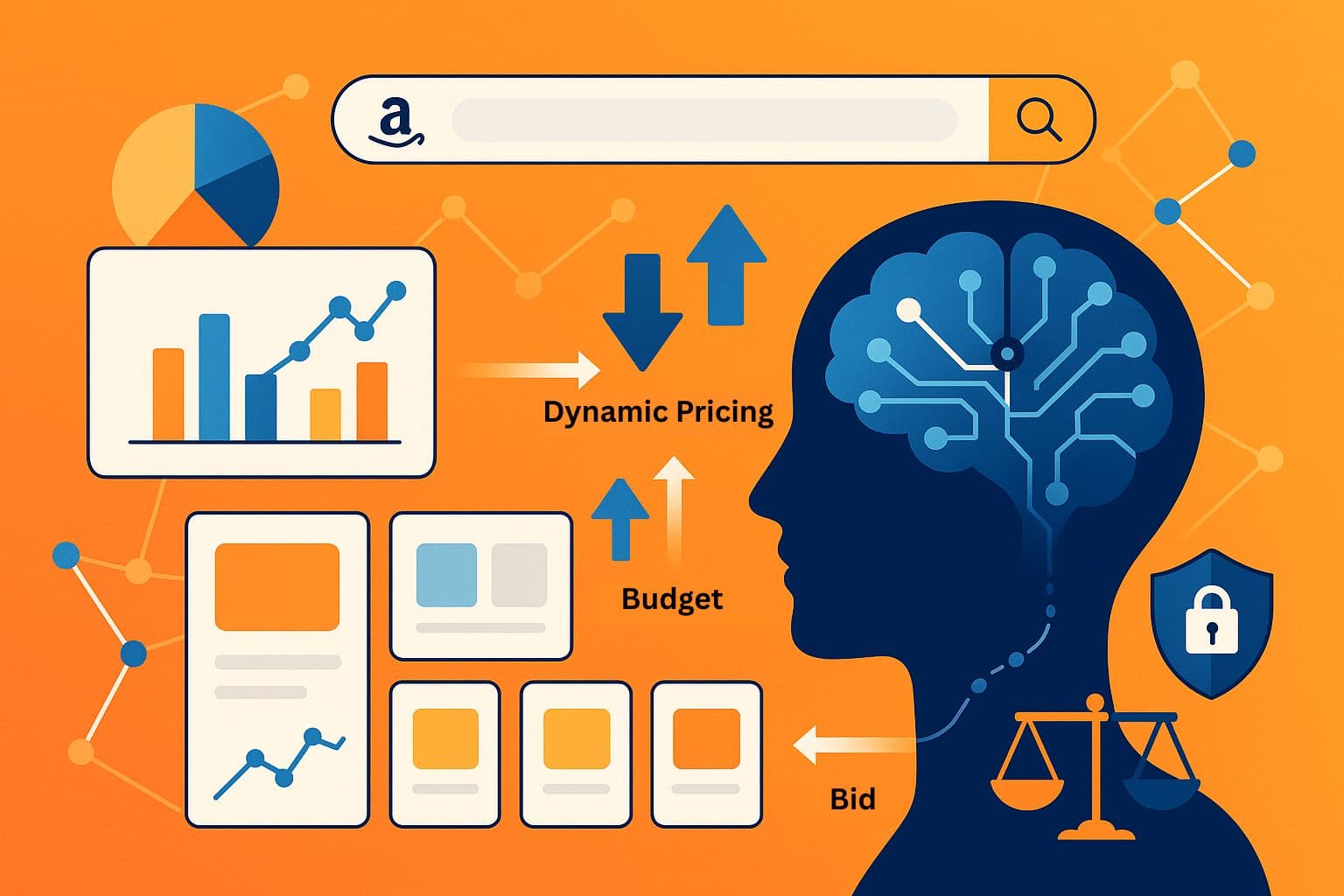
Amazon ads optimization strategy has moved from guesswork to a discipline powered by real shopper behavior, measurable outcomes, and automation. In an ecosystem where retail intent and media meet, the brands that grow fastest use data to shape targeting, budgets, and bids in near real time, then close the loop with rigorous attribution and pricing decisions. This article explains how to build data-driven Amazon ads—what to watch, how to act, and where AI now accelerates results—while addressing privacy, bias, and skills gaps. It also highlights why unifying ad optimization with dynamic pricing creates compounding performance gains, a principle core to Profasee’s platform.
Amazon’s ad platform sits at the intersection of commerce data, media inventory, and ad tech, enabling precision that most walled gardens can’t match. Because Amazon advertising data is rooted in purchase behavior, brands can align campaigns to intent, optimize based on conversion tracking, and prove impact through marketing attribution and ROI measurement. Industry observers note that the platform’s integration of retail signals and ad delivery is what makes smarter, more targeted campaigns possible, redefining how advertisers plan and scale initiatives grounded in measurable outcomes (see this overview of Amazon Ads’ integrated approach from Velocity Sellers).
Data-driven marketing means using analytics and observable performance signals—not hunches—to guide decisions about audiences, keywords, bids, budgets, and creative. With hundreds of millions of active customers and deep purchase histories, Amazon’s graph powers far more precise targeting than channel-agnostic demographic buys, especially when combined with mid- and lower-funnel formats that capture in-market intent.
Traditional intuition-led planning versus Amazon’s data-driven system:
Responsible use of data is non-negotiable. Regulations such as GDPR and CCPA set boundaries on data collection, processing, and retention, which can limit how granularly advertisers target and measure, and require documented consent and data minimization practices. Researchers and practitioners have also highlighted that machine learning model bias—systematic, repeatable errors that skew outcomes—can affect who sees which ads and at what price, if left unchecked (see discussion on data science and bias in Amazon’s ad ecosystem on Medium).
Algorithmic bias: the tendency of automated systems to produce unfair outcomes (e.g., privileging certain groups) due to skewed training data, proxy variables, or feedback loops.
Practical steps to protect privacy and minimize bias:
From reading to action
If the framework above sounds familiar, your Amazon account is probably carrying the same drag. Apply and we will show what Marko, Oracle, and Bruno would change in your first week.

Ran a 7-figure Amazon brand for a decade. Founded Skubana (acquired). Co-founded Prosper Show. 15+ years on Amazon.
Join the brands that replaced agencies and tools with AI employees.
Real-time analytics is the instantaneous collection, processing, and analysis of data as it’s generated—allowing for adjustments in live campaigns rather than waiting for post-mortems. On Amazon, that means dynamic bidding, budget shifts, and placement tuning based on current traffic quality, not yesterday’s averages. During demand spikes like Prime Day, the brands that scale profitably are those that can adjust within minutes, maintaining performance as auction intensity and competitor behavior shift (see Skai’s take on operational challenges and the need for faster optimization).
A practical flow for campaign performance tracking and dynamic optimization:
Key Amazon ad metrics to watch: CPC, CVR, ACOS/ROAS, TACOS, share of voice, new-to-brand, and contribution margin by ASIN.
Machine learning is a type of AI that learns patterns from data to improve predictions and actions over time without explicit programming. Amazon’s ad ecosystem increasingly leans on ML, predictive analytics, and natural language processing to streamline campaign setup and optimization—everything from keyword expansion to creative alignment with shopper intent (see this overview of ML in Amazon advertising on Medium). AI now automates bid changes, placement decisions, and audience selection at a speed and scale that enhances efficiency and personalization (see Ad Badger’s 2025 predictions on AI-driven PPC).
Current and near-future AI applications in Amazon Ads:
Tools are advancing faster than most teams’ playbooks. Many brands face a skills gap in Amazon PPC management because the ecosystem evolves quickly—formats, policies, and measurement change constantly (as outlined by Skai). Meanwhile, expert management and advanced optimization are consistently linked to more predictable profit growth, especially when campaigns are tightly aligned with retail operations and pricing strategy (see perspective from Velocity Sellers).
Pathways to close the gap:
Checklist of core skills and resources:
Growth now requires going beyond Sponsored Products. Sponsored Display and Amazon DSP reach shoppers by behavior and context, not just keywords, helping brands break through keyword saturation and build mid-funnel demand (see AI Commerce’s 2025 trends). Amazon Marketing Cloud (AMC) is also opening up with more direct, no-code access and AI-powered insights, improving how advertisers measure cross-channel paths and optimize budgets (see Feedvisor’s coverage of recent Amazon Accelerate updates). As Storefront Analytics expands, sellers gain shopper flow and pathing data that strengthens mid-funnel segmentation and creative sequencing (see GB Media’s analysis).
How core formats support growth goals:
Amazon Ads is innovating faster than retail sales growth, increasing the payoff for rigorous, data-driven decision-making and better measurement (see Feedvisor’s summary of accelerated updates). Experts expect a shift to full-funnel, AI-orchestrated campaigns, richer incrementality measurement, and generative AI that turns signals into actions and content at scale (see GB Media’s view on Storefront Analytics upgrades and Ad Badger’s PPC forecasts). To stay competitive, remain agile: invest in generative AI, cross-channel attribution, and rapid-response playbooks that adapt to shopper and auction dynamics.
Top trends to watch:
Data-driven advertising on Amazon uses real shopper data and analytics to optimize ad targeting, bidding, and creative, helping sellers maximize return on investment with measurable outcomes.
Amazon complies with privacy regulations like GDPR and CCPA and continuously invests in tools and practices to anonymize data and reduce potential bias in its advertising algorithms.
Real-time analytics let Amazon sellers track campaign performance instantly and adjust bids or budgets dynamically, leading to more efficient and responsive ad strategies.
AI automates tasks like bid management and audience targeting, enabling private label brands to optimize campaigns faster and more accurately while saving time.
Despite powerful automation, human expertise is needed to interpret results, strategize across product lines, and ensure campaigns reflect brand goals and audience needs.