Chad Rubin
April 18, 2026 · Updated May 11, 2026 · 11 min read
Operator notes by email
Short, opinionated takes on AI agents, Amazon PPC, pricing, and inventory. No fluff. About once a week.

Amazon inventory forecasting is the difference between a brand that grows and a brand that bleeds money through stockouts and overstocks. I have run an Amazon business for over a decade and built a company around solving this exact problem. What I can tell you is that most sellers are still approaching inventory forecasting the wrong way.
The problem is not that forecasting tools are inaccurate. Most of the tools on this list do a reasonable job predicting demand. The problem is that a forecast sitting in a spreadsheet or a standalone dashboard does nothing when inventory actually gets tight. You still have to manually pause ads, adjust prices, and coordinate across your entire operation before the stockout hits.
That coordination gap is where real money gets lost. A 2025 report from the National Retail Federation estimated that US retailers lost over $1 trillion in revenue from inventory distortion, including both stockouts and overstocks. For Amazon sellers specifically, a stockout on a top ASIN does not just cost you the missed sales. It tanks your organic rank, wastes the PPC spend that was driving traffic to a listing that can not convert, and hands momentum to your competitors.
This guide covers the amazon inventory forecasting tools that actually matter in 2026, with honest assessments of what each one does well and where the gaps are.
Key Takeaways
Before comparing tools, it is worth understanding why forecasting alone does not solve the inventory problem.
A good forecast tells you that you will run out of stock in 22 days. That is useful information. But what happens next determines whether you actually prevent the stockout or just watch it coming.
In a typical operation, the seller sees the alert, then manually logs into their PPC tool to reduce ad spend on that ASIN. Then they check their repricing tool to see if raising the price would slow velocity enough to buy time. Then they message their freight forwarder about expediting the next shipment. Then they update their team.
From reading to action
If the framework above sounds familiar, your Amazon account is probably carrying the same drag. Apply and we will show what Marko, Oracle, and Bruno would change in your first week.

Ran a 7-figure Amazon brand for a decade. Founded Skubana (acquired). Co-founded Prosper Show. 15+ years on Amazon.
Join the brands that replaced agencies and tools with AI employees.
That process takes hours. And it assumes you caught the alert in time.
The real gap in amazon inventory forecasting is not the prediction. It is the response. The tools that only forecast are giving you a weather report without an umbrella. You know the storm is coming, but you are still scrambling to react manually.
Best for: Amazon sellers who want forecasting that triggers automatic responses across PPC, pricing, and operations.
Pricing: $299/mo
Bruno monitors sales velocity, inventory risk, reorder timing, and stock pressure across your entire catalog. The forecasting engine accounts for seasonality, promotions, and trend shifts. But the forecasting is not what makes Bruno different.
What makes Bruno different is what happens after he detects a problem.
When Bruno identifies a stockout risk on an ASIN, the response is automatic and coordinated. Marko (the PPC manager) reduces ad spend on that product to slow traffic. Oracle (the pricing specialist) can raise the price to reduce velocity and protect margin on remaining units. Claudia (the COO) flags the situation in your morning brief with a clear summary of the risk and the actions already taken.
No standalone inventory tool does this because no standalone tool has access to your PPC bids, pricing rules, and operations layer. Bruno is not a silo. He is part of a team.
The reverse also works. When a new shipment arrives and inventory is healthy again, Bruno signals the all-clear. Marko ramps ad spend back up. Oracle adjusts pricing to capture demand. You do not have to manually flip switches across three different platforms.
What to consider: Bruno delivers the most value as part of the Profasee Ultra platform, where the coordination between AI employees is the core advantage. If you only need a standalone spreadsheet-style forecast without the cross-function coordination, a simpler tool may be sufficient. But if you have ever lost money because your PPC kept running while inventory ran dry, that coordination is exactly what you are paying for.
Best for: Sellers who want deep, dedicated inventory management with long-range forecasting.
Pricing: Part of Carbon6 suite (pricing varies)
SoStocked has been a respected name in Amazon inventory management for years, and its acquisition by Carbon6 gave it a larger ecosystem to play in. The tool forecasts demand up to 12 months ahead, accounting for seasonality, trends, and planned promotions. ProfitFlow, their companion tool, adds forward-looking profit analysis.
The purchase order automation is genuinely useful. SoStocked can generate POs based on your forecast, factoring in supplier lead times, shipping timelines, and safety stock thresholds. For sellers managing complex supply chains with multiple suppliers and long lead times, this level of detail matters.
The dashboard gives you a clear picture of your inventory health across your catalog. Reorder alerts, days of stock remaining, and velocity trends are all easy to access.
What to consider: SoStocked is now part of the broader Carbon6 suite, which means the pricing and packaging may depend on what else you need from Carbon6. As a standalone forecasting tool, it is strong. But like all standalone tools, acting on a stockout warning still requires you to manually coordinate with your PPC and pricing tools. The forecast tells you the problem. The response is on you.
Best for: Sellers already using Jungle Scout who want integrated inventory forecasting without adding another tool.
Pricing: Included in Growth Accelerator ($79/mo) and Brand Owner + CI ($399/mo) plans
Jungle Scout Inventory Manager pulls from your sales data and supplier lead times to forecast demand and recommend reorder quantities. For sellers already invested in the Jungle Scout ecosystem for product research and keyword tracking, having inventory management in the same platform reduces tool sprawl.
The interface is clean and straightforward. You set your supplier lead times, manufacturing times, and shipping durations, and the tool calculates when you need to reorder. It accounts for sales velocity and can factor in seasonal patterns based on historical data.
For mid-size sellers running 20 to 50 SKUs, the simplicity is an advantage. You are not paying for features you do not need, and the learning curve is minimal.
What to consider: The forecasting is functional but not as deep as dedicated inventory tools like SoStocked. It works best for sellers with relatively stable demand patterns and straightforward supply chains. If you are running a large catalog with multiple suppliers, complex lead times, or heavy promotional cycles, you may outgrow it. And like most tools in this category, there is no connection to your PPC management or repricing decisions.
Best for: Sellers who want detailed forecasting with purchase order management and shipment tracking.
Pricing: Varies by plan and SKU count
Inventory Optimizer offers one-year demand forecasts with PO recommendations and shipment tracking built in. The tool aims to give you a complete picture of your inventory pipeline, from forecast to purchase order to shipment to FBA check-in.
The PO recommendation engine factors in your supplier lead times, shipping method, and target stock levels. Shipment tracking lets you monitor inbound inventory and see when units are expected to be available for sale. For sellers juggling multiple shipments at different stages, having this visibility in one place saves time.
The forecasting model uses your historical sales data, and you can adjust for known events like upcoming promotions or seasonal shifts.
What to consider: Inventory Optimizer is a solid standalone tool for the forecasting and PO management workflow. The depth of its supply chain tracking is a genuine strength. Where it shares the same limitation as other standalone tools is in the response layer. When the forecast says you are running low, the tool tells you. What it can not do is automatically adjust your ad spend, modify your pricing, or coordinate a cross-functional response.
Best for: New sellers or anyone who wants a free baseline before investing in third-party tools.
Pricing: Free (included with Seller Central)
Amazon offers several native tools for inventory management. The Inventory Performance Dashboard tracks your IPI (Inventory Performance Index) score, which affects your FBA storage limits. The FBA restock recommendations suggest quantities and ship dates based on Amazon's demand estimates. The Inventory Health report identifies slow-moving and excess inventory.
These tools have improved significantly over the past two years. Amazon's FBA forecasting now incorporates marketplace-wide demand signals that third-party tools simply do not have access to. For basic inventory hygiene, they are a reasonable starting point.
What to consider: Amazon's built-in tools provide a solid baseline and are free to use. The restock recommendations work well for sellers with straightforward demand patterns. For sellers running promotions, adjusting PPC spend, or managing complex pricing strategies, the forecasting may not account for those variables. Think of these as a useful starting point that you can supplement with more specialized tools as your business grows.
After testing and building in this space for years, here is what I think actually separates useful inventory forecasting from expensive dashboards.
Every tool on this list produces reasonable demand forecasts. The algorithms are mature. The data inputs are similar. If you are choosing a tool primarily based on forecast accuracy benchmarks, you are optimizing for the wrong variable.
A forecast that is 90% accurate but sits in a dashboard you check once a day is less valuable than a forecast that is 85% accurate but triggers automatic protective actions the moment risk is detected.
This is the central insight that most inventory tools miss. Forecasting is a means to an end. The end is protecting your revenue, your organic rank, and your ad spend when inventory gets tight.
Ask yourself: when my forecasting tool flags a stockout risk, what happens next? If the answer involves you manually logging into three different tools, the forecast is a notification, not a solution.
With Bruno, the answer is that Marko pulls back PPC spend, Oracle adjusts pricing, and Claudia tells you what happened and why. The forecast triggered an automatic, coordinated response. That is the difference between monitoring and managing.
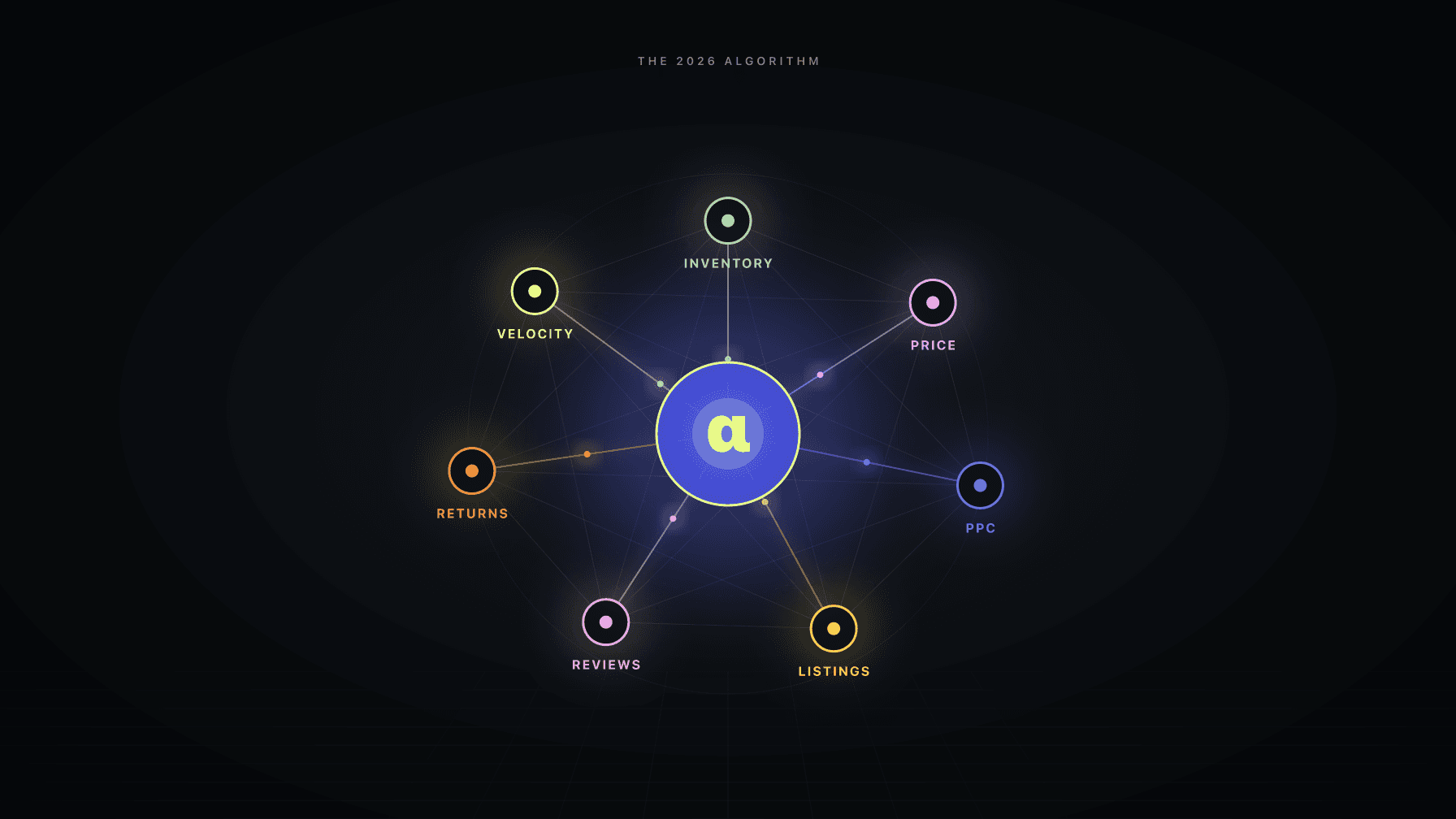
Your inventory decisions affect your PPC. Your PPC decisions affect your inventory. Your pricing decisions affect both. Any tool that treats inventory as an isolated function is ignoring the physics of how Amazon businesses actually work.
When you raise prices to slow velocity on a low-stock ASIN, your conversion rate changes. If your PPC tool does not know the price changed, it keeps bidding based on stale conversion data. You burn ad spend. When you run a promotion to clear excess inventory, your forecasting tool needs to know that the velocity spike is intentional, not organic demand.
These connections are not nice-to-have features. They are the difference between making money and leaving it on the table.
If you are doing under $30K/month in revenue: Start with Amazon's free tools. Learn the fundamentals of inventory planning. Use a simple spreadsheet to track lead times and reorder points. You do not need sophisticated forecasting yet.
If you are doing $30K to $100K/month: This is where stockouts start to cost real money. A tool like Jungle Scout Inventory Manager or Inventory Optimizer gives you the structure to stay ahead of demand without overcomplicating things.
If you are doing $100K/month or more: At this scale, every stockout is expensive. Every day of excess inventory is capital sitting in a warehouse instead of working for you. More importantly, your PPC spend is significant enough that running ads into a stockout is a serious waste. This is where the coordination between inventory, PPC, and pricing stops being a nice feature and starts being a financial requirement.
At this level, Bruno and the Profasee Ultra team pay for themselves by preventing the cascading failures that disconnected tools can not see coming.
The best amazon inventory forecasting tool in 2026 depends on what you need it to do. If you need a standalone forecast with deep supply chain tracking, SoStocked and Inventory Optimizer are strong options. If you want forecasting bundled with your existing research tools, Jungle Scout covers the basics.
But if you have lived through a stockout where your PPC kept spending, your pricing stayed flat, and nobody on your team knew until the damage was done, you already understand why forecasting alone is not enough.
Bruno does not just predict demand. He coordinates the entire operational response when things go sideways. That is not a marginal improvement. It is a fundamentally different approach to inventory management.
Every day your inventory tool operates in a silo is a day your PPC, pricing, and forecasting are making decisions that contradict each other. Your competitors running coordinated systems do not have that problem.
What is amazon inventory forecasting and why does it matter? Amazon inventory forecasting uses historical sales data, seasonality patterns, and demand signals to predict how much stock you will need and when to reorder. It matters because stockouts kill your organic ranking, waste PPC spend on listings that can not convert, and hand sales to competitors. Overstocking ties up cash and racks up FBA storage fees. Accurate forecasting keeps you in the sweet spot between both.
How accurate are Amazon inventory forecasting tools? Most reputable tools achieve 80 to 90 percent accuracy on demand forecasts under stable conditions. Accuracy drops during major promotions, seasonal shifts, or when external factors (supply chain disruptions, competitor actions) change the demand landscape. The more important question is what the tool does with the forecast. An accurate prediction that sits in a dashboard is less useful than a slightly less precise forecast that triggers automatic protective actions.
Can Amazon's free inventory tools replace paid forecasting software? For new sellers doing under $30K per month, Amazon's built-in tools provide a reasonable starting point. The FBA restock recommendations and Inventory Performance Dashboard cover the basics. However, Amazon's tools tend to favor overstocking, do not account for your PPC or pricing strategy, and lack the sophistication needed for complex catalogs. Most sellers outgrow them once they pass 20 to 30 SKUs or $50K in monthly revenue.
What happens to my Amazon ranking if I stock out? A stockout can drop your organic ranking significantly, and recovering that lost position often takes weeks or months of sustained sales velocity. During the stockout, competitors absorb your traffic and build their own ranking momentum. The PPC spend you were using to maintain visibility is either wasted (if ads keep running on an out-of-stock listing) or paused (meaning you lose paid visibility too). This is exactly why coordinated tools like Profasee Bruno automatically reduce ad spend and adjust pricing before a stockout hits.
How is Profasee Bruno different from standalone inventory forecasting tools? Standalone tools forecast demand and alert you when stock is running low. Bruno does that too, but the difference is what happens after the alert. When Bruno detects a stockout risk, Marko automatically reduces PPC spend on that ASIN, Oracle can adjust pricing to slow sales velocity, and Claudia flags the situation in your morning brief. No standalone inventory tool coordinates across PPC, pricing, and operations because none of them have access to those systems. See pricing for the full Ultra team.