Chad Rubin
April 20, 2026 · Updated April 23, 2026 · 12 min read
Operator notes by email
Short, opinionated takes on AI agents, Amazon PPC, pricing, and inventory. No fluff. About once a week.

Your Amazon repricing strategy is probably losing you money. Not because your repricer is broken, but because it is blind.
Most repricing software does exactly one thing: watch competitor prices and react. Price goes down across the listing, your price follows. Competitor raises their price, yours creeps up. The logic is simple, and that is the problem.
I ran a 7-figure Amazon brand for a decade. I used every major repricer on the market. What I found is that the best repricing strategy is not about reacting faster to competitor prices. It is about making pricing decisions that account for your entire business: your margins, your inventory levels, your ad spend, and your profit targets.
This Amazon repricing guide breaks down the three types of repricing strategies, why most of them fail, and what a profit-aware approach actually looks like in practice. By the end, you will know which approach fits your catalog, your margins, and your growth stage.
Key Takeaways
An Amazon repricing strategy is the system you use to set and adjust prices across your catalog. It determines when prices move, how far they move, and what triggers the change.
At its simplest, a repricing strategy is a set of rules: "Never price below $14.99. Stay within 5% of the lowest FBA offer. Always be $0.50 under the Buy Box price." These rules keep your pricing competitive without manual updates to every ASIN every day.
But strategy goes deeper than rules. A complete repricing strategy answers three questions. What is the goal of each price change? What data should inform that decision? What else in my business does that price change affect?
Most sellers stop at the first question. They set a goal of winning the Buy Box, hand the execution to a repricer that only sees competitor data, and never revisit the second and third questions. That is where repricing strategies either protect profit or quietly erode it.
Learn how dynamic pricing differs from traditional repricing.
From reading to action
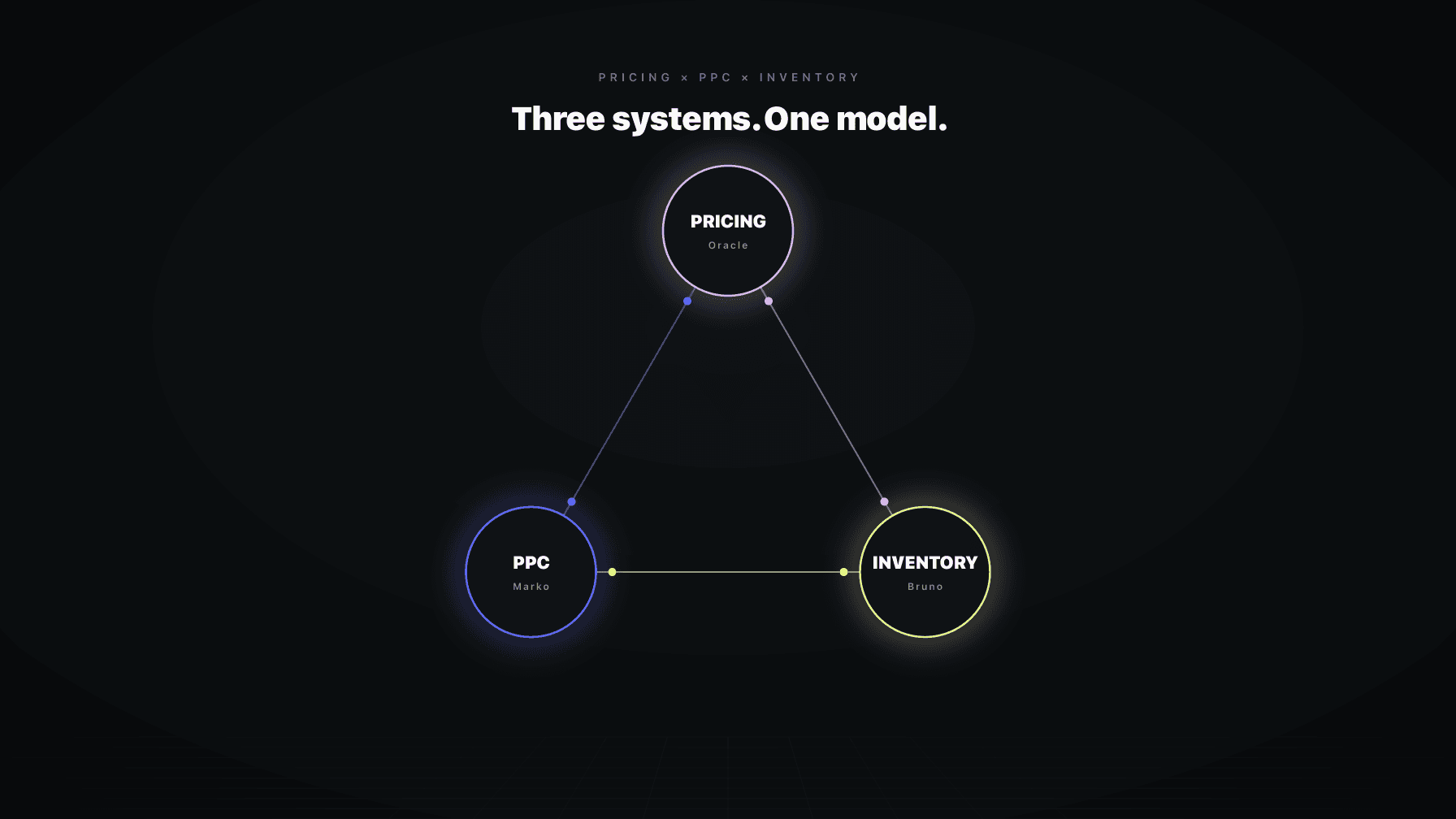
If the framework above sounds familiar, your Amazon account is probably carrying the same drag. Apply and we will show what Marko, Oracle, and Bruno would change in your first week.

Ran a 7-figure Amazon brand for a decade. Founded Skubana (acquired). Co-founded Prosper Show. 15+ years on Amazon.
Join the brands that replaced agencies and tools with AI employees.
Not all repricing strategies work the same way. Understanding the differences helps you pick the right approach for your business.
Rule-based repricing is the oldest and most common approach. You define the logic. The software executes it. "If the Buy Box price drops below $18, match it. If I own the Buy Box and no competitor is within $2, raise my price by $0.50."
This approach gives you full control. Every price movement is traceable to a rule you wrote. There are no surprises, and that predictability matters when you are managing tight margins on hundreds of SKUs.
What to consider: Rules work well when your competitive landscape is stable and predictable. As your catalog grows, maintaining rules across hundreds of SKUs with seasonal shifts, fee changes, and competitive dynamics requires more time and attention. Many sellers start with rule-based repricing and graduate to algorithmic approaches as complexity increases.
Tools in this category include RepricerExpress and Amazon's own Automate Pricing — the first-party rule-based repricer available inside Seller Central.
Algorithmic repricing uses machine learning to set prices without explicit rules. Instead of "match the Buy Box minus $0.25," the algorithm analyzes historical sales data, competitor patterns, and demand signals to find the price that optimizes for a target metric.
The best algorithmic repricers use game theory to avoid the race to the bottom. Rather than simply undercutting, they learn competitor behavior patterns and find pricing equilibria that sustain margins across the listing.
This is a meaningful step up from rules. Algorithmic repricing adapts to market shifts without manual intervention. It can identify opportunities that static rules miss, like raising prices during demand surges or holding firm when a competitor's pricing pattern suggests they will raise their price within 48 hours.
What to consider: Algorithmic repricing is a significant step up from rules. These tools focus on pricing data, competitor behavior, and Buy Box dynamics. For sellers who also want their repricing decisions to account for ad spend, inventory runway, or real-time margin data, that additional context would need to come from connecting other tools or moving to a coordinated platform.
Tools in this category include Seller Snap and Informed.co.
Coordinated AI repricing treats pricing as one function within a connected business system. The repricing logic has access to your real margins, your current inventory position, your PPC performance, and your listing health, and uses all of it to make pricing decisions.
This is not just algorithmic repricing with extra data inputs. It is a fundamentally different architecture. When your inventory drops below 3 weeks of cover, a coordinated system raises prices to slow velocity and prevent a stockout. When your PPC cost-per-click increases on a specific ASIN, the system adjusts the price to protect the margin after ad spend. When a listing audit finds suppressed content hurting conversion rate, the system accounts for that before changing price.
The coordination goes both directions. When the pricing system raises a price, the PPC system adjusts bids to reflect the new margin. When the inventory system flags aging stock, the pricing system can run a velocity play to clear it before the new shipment arrives.
This is the approach Profasee Oracle takes. Oracle is not a standalone repricer. It is an AI pricing specialist that coordinates with Marko (PPC), Bruno (inventory), and Brett (listings) to make pricing decisions with full business context.
The failure mode is almost always the same: the repricer makes a locally optimal decision that is globally destructive. It wins the battle on one metric while losing the war on profit.
Here are the three most common ways it happens.
Most repricers work with a price floor you set manually. You calculate your landed cost, add your target margin, and set that as the floor. The repricer stays above it. Problem solved.
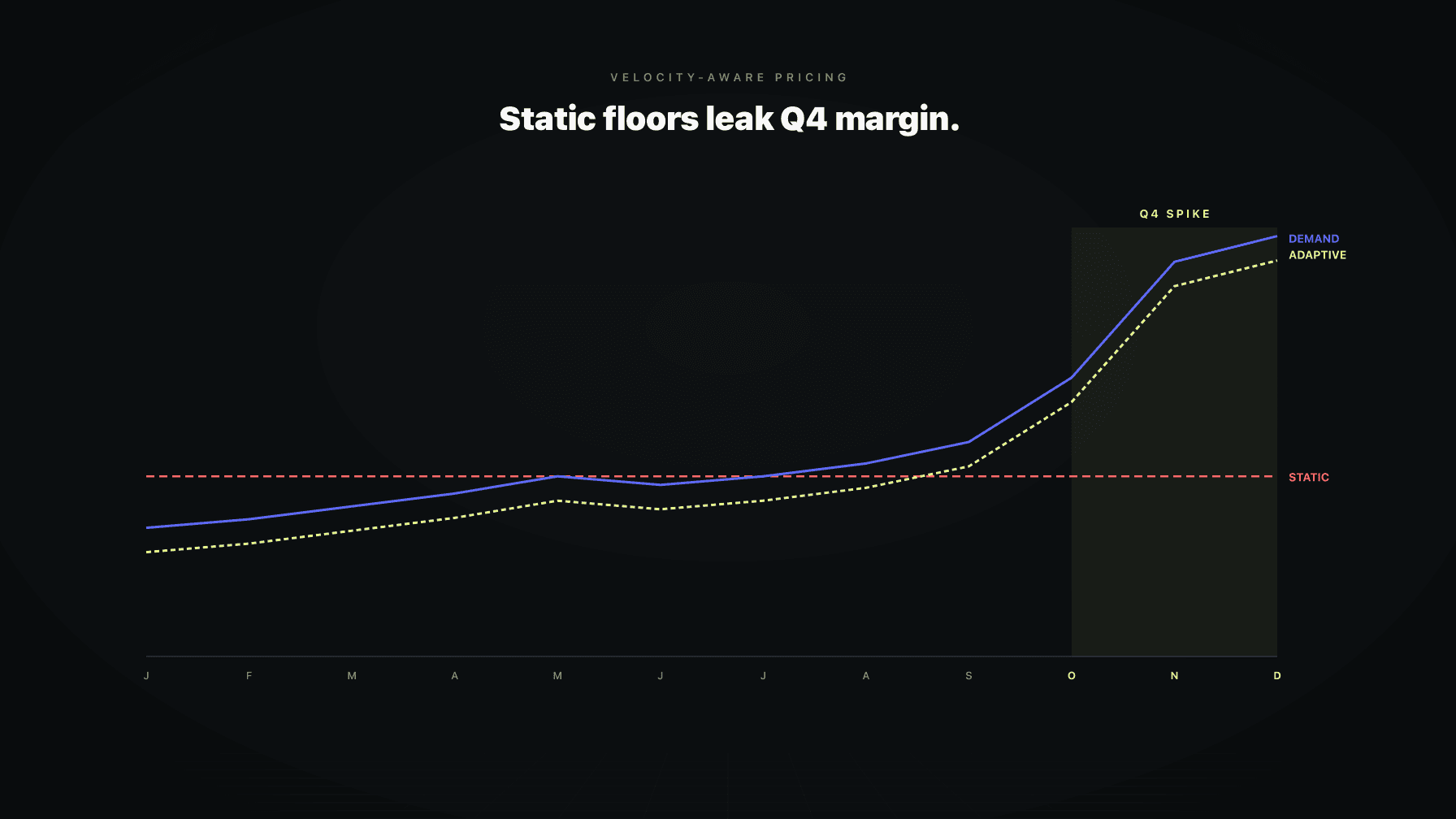
Except your margins are not static. Amazon's referral fees, FBA fulfillment fees, and storage fees change. Your COGS fluctuate with supplier pricing and shipping costs. Monthly storage fees spike during Q4. Your actual margin on any given ASIN shifts throughout the year, but your price floor sits where you set it six months ago.
A repricing strategy without real-time margin data will price you into negative profit territory on specific SKUs without raising a flag. You see revenue holding steady and assume everything is fine. The profit leak shows up weeks later when you reconcile actual net margins.
Pricing and inventory are deeply connected, but most repricing strategies treat them as separate problems. Your repricer optimizes for Buy Box share and sales velocity. Your inventory tool tracks stock levels and reorder points. Neither one talks to the other.
This creates two expensive failure modes. First, your repricer runs an aggressive pricing strategy on an ASIN with 10 days of inventory left. Velocity spikes, you stock out, and you lose organic rank that took months to build. Second, your repricer holds prices firm on slow-moving inventory that is racking up long-term storage fees. A temporary price reduction would move the units and save you money, but the repricer has no idea the inventory is aging.
A profit-aware repricing strategy sees inventory data and adjusts. When stock is tight, prices rise to protect runway. When stock is aging, prices drop strategically to clear it before storage costs eat the margin.
Your repricer does not know what you paid to get that click. So it cannot factor in the real cost per conversion when deciding whether to match a competitor's price. Amazon's cost-per-click guidance notes that ad costs vary widely by category and placement — which means the "right" price after ad spend varies ASIN by ASIN. A repricer blind to ad cost will protect the Buy Box while destroying margin.
This is the blind spot that costs sellers the most. Your repricer raises a price to capture margin on a high-performing ASIN. Good move in isolation. But your PPC campaigns are still running the same bids on that ASIN, and the higher price just tanked your conversion rate. Your ACoS spikes. Profitability drops.
The reverse is equally damaging. Your PPC tool launches an aggressive campaign on an ASIN, driving volume. Your repricer sees the increased sales velocity and holds or raises the price. But the ad spend that drove that velocity was not accounted for in the margin calculation. You are "winning" while spending more to acquire each sale than the repriced margin supports.
When pricing and PPC operate independently, every pricing decision has unintended consequences on ad performance, and every PPC decision has unintended consequences on pricing effectiveness.
A profit-aware repricing strategy starts with a different question. Instead of "What price wins the Buy Box?" it asks "What price maximizes profit given everything happening in this business right now?"
That requires four data inputs most repricers do not have.
Real-time cost data. Not the static price floor you entered during setup. Actual COGS, current FBA fees, storage costs, and inbound shipping costs that update as they change. The system needs to know your true margin on every ASIN at any given moment, not what it was when you last updated a spreadsheet.
Inventory position. Days of cover, inbound shipment status, restock lead times, and aging inventory flags. Pricing decisions should account for whether you have 90 days of stock or 9 days of stock. The optimal price is different for each scenario.
PPC performance. Ad spend per ASIN, cost per click, ACoS, TACoS, and conversion rates from paid traffic. A pricing change that ignores ad spend is calculating profit on incomplete data. The system needs to know what it costs to drive each sale before it sets the price.
Listing health. Suppressed content, missing A+ pages, poor main images, and variant issues all affect conversion rate. If conversion rate is depressed because of a listing problem, dropping price to compensate is throwing money at the wrong problem.
This is exactly what Oracle does. It pulls all four data inputs and makes pricing decisions that account for the full picture. When Marko (PPC) increases spend on an ASIN, Oracle factors the ad cost into the pricing decision. When Bruno (demand planning) flags a stockout risk, Oracle raises the price to slow velocity. When Brett (catalog audit) identifies a listing issue depressing conversion, Oracle holds price steady instead of dropping it.
The result is not just smarter individual pricing decisions. It is pricing that does not create problems in other parts of your business.
The coordination between repricing, PPC, and inventory is not a nice-to-have. It is the difference between scaling profitably and scaling chaos.
Every price change affects PPC performance. When you raise a price, your conversion rate from paid traffic typically drops. If your PPC bids do not adjust, you are paying the same cost per click for fewer conversions. Your ACoS inflates and your profit-per-sale shrinks.
When you lower a price, conversion rates usually improve. Your existing PPC spend becomes more efficient, but only if bid strategy accounts for the lower margin. Otherwise you drive more volume at a per-unit profit that no longer supports the ad spend.
In a coordinated system, these adjustments happen automatically. Oracle changes a price, and Marko recalculates bids based on the new margin. Marko shifts budget toward a high-performing ASIN, and Oracle factors the increased ad cost into the pricing decision.
Pricing is the fastest lever you have for managing inventory velocity. When stock is running low, a price increase slows sales and extends your runway until the next shipment arrives. When stock is aging and approaching long-term storage fee thresholds, a temporary price reduction moves units before the fees hit.
Most sellers manage this manually. They check inventory levels, then go update pricing rules, then remember to change them back when the new shipment lands. It works at 20 SKUs. It breaks at 200.
With Oracle and Bruno working together, these adjustments happen based on real inventory data. Bruno monitors stock levels, inbound shipments, and velocity trends. When he detects a risk, Oracle adjusts pricing within the guardrails you have set. No manual intervention. No forgotten adjustments on SKUs you did not check this week.
The whole point of an Amazon repricing guide like this one is to end up with a decision, not just a mental model. The right repricing strategy depends on your business. Here is a framework for deciding.
If you sell fewer than 20 SKUs and compete primarily on price, rule-based repricing is probably sufficient. The rules are manageable at this scale, and you can monitor the results daily without it consuming your morning.
If you sell 20-100 SKUs with moderate to high margins, algorithmic repricing gives you an edge. The algorithm handles the complexity that manual rules cannot, and the investment in a tool like Seller Snap or Informed.co starts to pay for itself in time saved and margin captured.
If you sell 100+ SKUs, run significant PPC spend, and care about total profitability, coordinated repricing matches the complexity of your business. At this scale, the cost of uncoordinated decisions between pricing, PPC, and inventory compounds daily. Every ASIN where pricing ignores ad spend is a profit leak.
This is the level where Oracle delivers the most value. At $349/mo, it costs less than most standalone repricers while delivering something none of them can: pricing decisions that account for your full business context. Oracle coordinates with Marko, Bruno, and Brett automatically. You set the guardrails, the profit targets, and the price boundaries. Oracle handles the rest.
For any approach, ask these questions before committing:
If the answer to most of those is no, you are running a repricing tool, not a repricing strategy.
The short version of this Amazon repricing guide: competitor-only repricing protects Buy Box share; business-context repricing protects profit. Most sellers who switch to coordinated pricing recoup the tool cost within the first margin-protection event.
What is the best Amazon repricing strategy for private label sellers? Private label sellers should prioritize profit-aware repricing over Buy Box competition. Unlike wholesale or arbitrage sellers who compete directly on price, private label sellers own their listing and can optimize price based on demand, margins, and PPC performance. A coordinated repricing strategy that accounts for ad spend and inventory levels will protect margins better than a rule-based repricer chasing competitor prices.
How often should an Amazon repricer change my prices? Frequency depends on your competitive landscape. For competitive categories with multiple FBA sellers on the same listing, repricing every 15-30 minutes keeps you competitive. For private label listings where you own the Buy Box, daily or demand-based adjustments are more appropriate. The better question is not how often, but on what basis. A repricer changing prices every 10 minutes based solely on competitor prices will create more churn than value.
Can Amazon repricing software hurt my account? Repricing software that operates through Amazon's SP-API is safe from an account health perspective. The risk is financial, not compliance-related. A poorly configured repricer can price you below profitability, drain inventory too fast, or trigger price-related suppression if prices swing too aggressively. Set hard price floors, monitor margin reports weekly, and use a system with guardrails and one-click undo to limit downside.
What is the difference between repricing and dynamic pricing on Amazon? Traditional repricing reacts to competitor price changes to maintain Buy Box position. Dynamic pricing adjusts prices proactively based on demand signals, inventory pressure, margin targets, and business context. Repricing asks "what are my competitors charging?" Dynamic pricing asks "what should I charge given everything happening in my business?" Most repricers are reactive. Profasee Oracle is a dynamic pricing specialist that uses both competitive data and business context.
How much does Amazon repricing software cost? Rule-based repricers start around $50-100/mo. Algorithmic repricers like Seller Snap and Informed.co range from $250-800/mo depending on SKU count. Profasee Oracle, which coordinates pricing with PPC, inventory, and listing data, is $349/mo. The cost comparison that matters is not the subscription price but the profit impact. A $50/mo repricer that prices you below profitability on 10 SKUs costs far more than a $349/mo system that protects margin across your entire catalog.