We onboard in small cohorts. April cohort is open. Apply now →
Profasee Ultra
ULTRA
Amazon PPCMarko

Campaign management for bids, budgets, placements, search terms, and spend control.

Amazon Pricing SoftwareOracle

Private-label pricing with better signals, hard guardrails, and explainable recommendations.

Demand PlanningBruno

Forecast demand, flag stock risk, and coordinate around inventory pressure before it hurts performance.

Listing OptimizationBrett

Audit titles, content, variations, and listing issues that quietly drag conversion.

Strategy & OpsClaudia

Coordinate the team, surface what changed, and keep operators aligned across the account.

ResultsCompareROI CalculatorPricing
Apply Now

Platform

  • AI Employees
  • Features
  • Ultra Managed
  • Why Agents
  • How It Works
  • Workflow Automations
  • Safety
  • ROI Calculator
  • Pricing
  • Apply Now

Solutions

  • Amazon PPC Software
  • Amazon Advertising Software
  • Amazon Repricer
  • Dynamic Pricing Tool
  • Price Tester

Ultra For

  • Agencies

Results

  • All Results
  • Wall Charmers
  • PF Harris
  • Terran
  • Speedy Press

Compare Repricers

  • Profasee vs Aura
  • Profasee vs AZSellerKit
  • Profasee vs BQool
  • Profasee vs Feedvisor
  • Profasee vs Informed
  • Profasee vs Repricer
  • Profasee vs RepricerExpress
  • Profasee vs Seller Snap
  • Profasee vs Trellis

Compare PPC

  • Profasee vs Pacvue
  • Profasee vs Perpetua
  • Profasee vs PPC Agencies
  • Profasee vs Hiring In-House

Company

  • About
  • Partners
  • Affiliate Program
  • Blog
  • Glossary
  • Privacy Policy
  • Cookie Policy
  • Terms of Service
  • Sitemap
Profasee Ultra
ULTRA

AI employees that run your Amazon business while you sleep.

Amazon SPN CertifiedAmazon Ads Verified Partner

Nugget Friday Newsletter

The e-commerce strategies of tomorrow. All in your inbox today.

Apply Now

© 2026 Profasee Inc. All rights reserved.

From Guesswork to Growth: Data-Driven Pricing Strategies to Win on Amazon | Profasee
← Back to blog
Pricing Strategy

From Guesswork to Growth: Data-Driven Pricing Strategies to Win on Amazon

Chad Rubin

Chad Rubin

February 27, 2026 · Updated April 4, 2026 · 4 min read

From Guesswork to Growth: Data-Driven Pricing Strategies to Win on Amazon

Pricing on Amazon has moved from “set it and forget it” to a high-frequency discipline shaped by real-time demand, competitor moves, ad auctions, and tight margin constraints. The brands that win don’t just pick a price—they run a pricing system: they track the right signals, model profitability at the ASIN level, and make controlled adjustments that protect conversion while expanding contribution margin. This article breaks down modern Amazon pricing strategies, how to use data to set and update prices with intent, and where automation and AI now accelerate results—while addressing operational risk and guardrails. It also shows how Profasee helps teams turn pricing into a repeatable, measurable growth engine by predicting and deploying optimal prices automatically—especially when pricing is coordinated with advertising.

Why Pricing Is the Main Lever on Amazon

On Amazon, price is never just a number—it’s a ranking input, a conversion driver, and a profit constraint all at once. Change your price and you often change:

  • Conversion rate and session-to-order rate
  • Buy Box competitiveness
  • Ad efficiency (CPC, CVR, ACOS/ROAS, TACOS)
  • Organic rank through sales velocity
  • Inventory outcomes (stockout risk vs. overstock drag)

The key is recognizing that pricing is part of your go-to-market engine, not a separate finance task. When pricing is aligned with inventory, ads, and margin targets, it becomes a controlled growth tool rather than a reactive firefight.

The Core Amazon Pricing Strategies That Actually Work

Most Amazon pricing approaches fall into a handful of models. Strong operators mix strategies by ASIN lifecycle stage, competitive intensity, and inventory position.

1) Competitive Pricing (Without Racing to the Bottom)

Competitive pricing uses market context—your closest substitutes, category norms, and Buy Box thresholds—to stay in the consideration set. The mistake is treating “lowest price wins” as the goal. On Amazon, the goal is max profit at sustainable conversion.

Best for: commodity categories, keyword-saturated niches, Buy Box volatility

Watch: price index vs competitors, Buy Box share, contribution margin after fees + promos

2) Value-Based Pricing

Value-based pricing ties your price to the differentiated benefit you deliver: bundle depth, materials, warranty, brand trust, usability, or convenience. This is how premium brands charge more than lookalikes and still win conversion.

Best for: branded differentiation, bundles/multipacks, trust-driven categories

Watch: conversion at multiple price points, review velocity, return rate shifts

Get more posts like this

Weekly insights on AI, Amazon operations, and profit optimization.

Explore Profasee Ultra

AI Employees

Meet the team

Compare

See how we stack up

Results

$82M+ profit unlocked

Chad Rubin

Chad Rubin

Founder & CEO, Profasee

Ran a 7-figure Amazon brand for a decade. Founded Skubana (acquired). Co-founded Prosper Show. 15+ years on Amazon.

More from the blog

Amazon PPC and Pricing Strategies for Private-Label Sellers

Nov 7, 2025

Amazon PPC and Pricing Strategies for Private-Label Sellers

Amazon Pricing Strategies & the Tools to Help Manage Prices

Jun 28, 2022

Amazon Pricing Strategies & the Tools to Help Manage Prices

How to Find the Optimal Price of a Product

Jun 27, 2022

How to Find the Optimal Price of a Product

Ready to put AI to work on your Amazon business?

Join the brands that replaced agencies and tools with AI employees.

Apply Now

3) Penetration Pricing (Launch + Rank Strategy)

Penetration pricing is a temporary “acquire share” play: price aggressively to drive velocity, learn demand curves, and earn rank—with a plan to step up price later.

Best for: new launches, re-launches, entering entrenched categories

Failure mode: never stepping price back up (training customers to expect discounts)

4) Margin-First Pricing (Profit Protection Strategy)

Margin-first pricing starts with unit economics and enforces discipline: the price must meet minimum contribution margin after Amazon fees, returns, and ad costs.

Best for: bulky/high-return products, high-fee categories, ad-expensive niches

Watch: net contribution margin, return rate, TACOS creep

5) Dynamic Pricing (Data-Driven Updates)

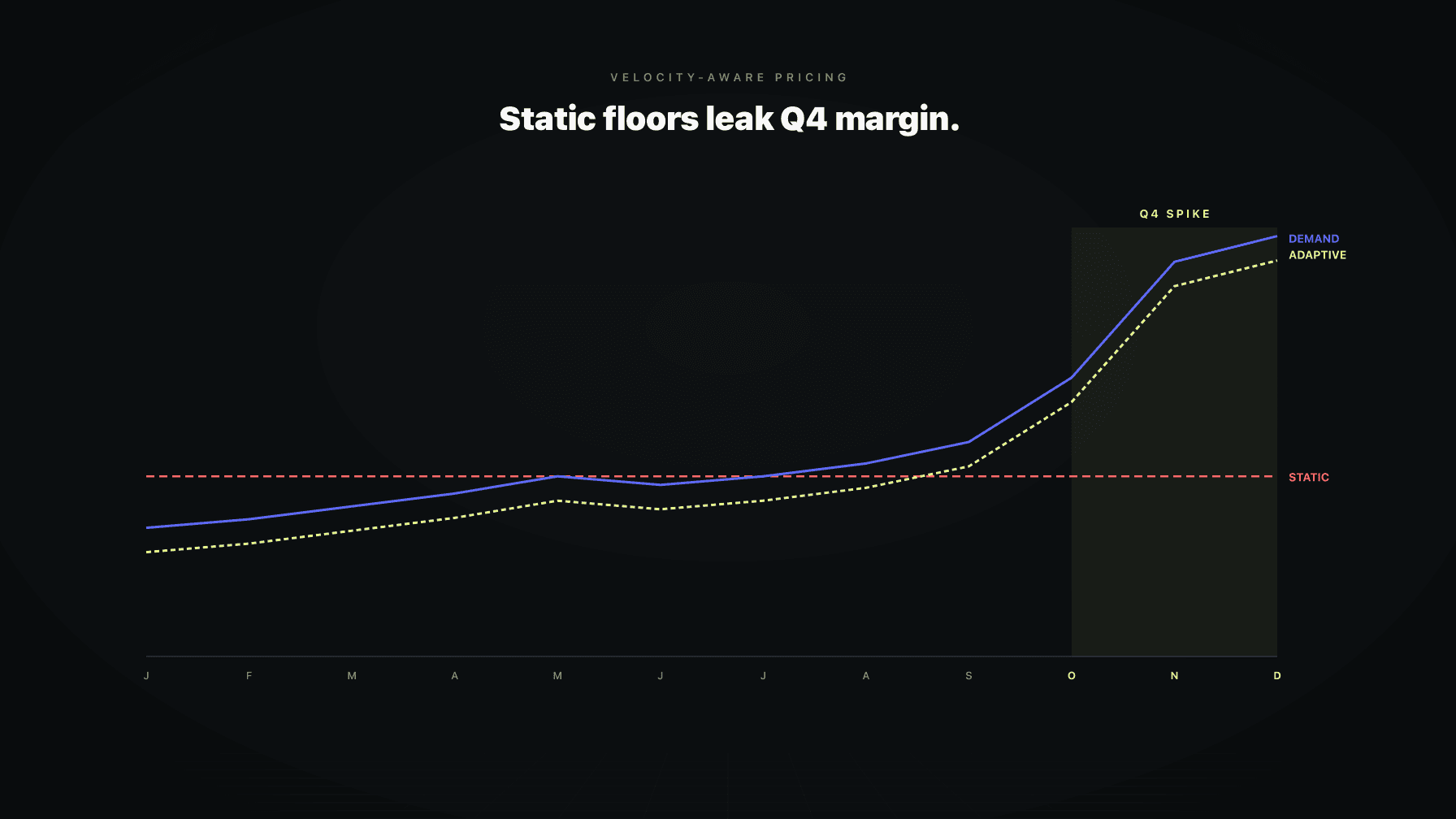
Dynamic pricing uses real-time signals to adjust price within guardrails. This is where pricing becomes a discipline: the environment changes daily (sometimes hourly), and static pricing leaves money on the table.

Best for: competitive categories, seasonal/event-driven demand, large catalogs

This is also where platforms like Profasee are built to operate—automating price optimization using large-scale marketplace signals and deploying updates aligned to your goals (profit, revenue, sell-through, etc.).

Using Data to Strategically Price Items on Amazon

Data-driven pricing means you don’t change price because you “feel” it’s time—you change price because the data indicates:

  1. demand can support it,
  2. competition requires it, or
  3. margin needs it.

The Data Signals That Matter

Demand + conversion signals

  • Sessions, unit session % (conversion proxy)
  • Organic rank / velocity shifts after price moves
  • New-to-brand / repeat patterns (if you have that visibility)

Competitive signals

  • Competitor price and how often they move
  • Buy Box win/loss patterns
  • Coupon/promo presence (discounts can matter as much as base price)

Profitability signals

  • Landed cost, Amazon fees, FBA fees, storage, returns
  • Ad spend by ASIN (TACOS + marginal ROAS)
  • Contribution margin by ASIN (not just gross margin)

Operational signals

  • Return rate and defect signals

A Practical Pricing Decision Framework

Use a consistent flow so pricing changes become repeatable and auditable.

Step 1: Set Guardrails

  • Minimum price (protect contribution margin)
  • Maximum price (protect conversion + brand trust)
  • Max change per day/week (avoid whiplash and algorithmic volatility)

Step 2: Segment ASINs

  • Launch vs mature
  • High-margin vs low-margin
  • Hero ASINs vs long-tail
  • Stable demand vs seasonal demand

Step 3: Learn Elasticity Through Controlled Tests

You don’t need fancy modeling to start. Run structured tests:

  • Keep ads, coupons, and creative stable
  • Move price in small steps (e.g., 3–7%)
  • Track conversion AND contribution margin, not revenue alone

Step 4: Optimize for Contribution Margin, Not “More Sales”

Sales growth that destroys profit is not growth—it’s expensive activity. Your primary KPI should be incremental contribution margin (with rank/share as supporting metrics).

Pricing and Ads: The Compounding Effect

Pricing changes affect ad performance fast:

  • Lower price can lift CVR → improve ACOS/CPA (sometimes dramatically)
  • Higher price can reduce CVR → force higher bids to maintain volume

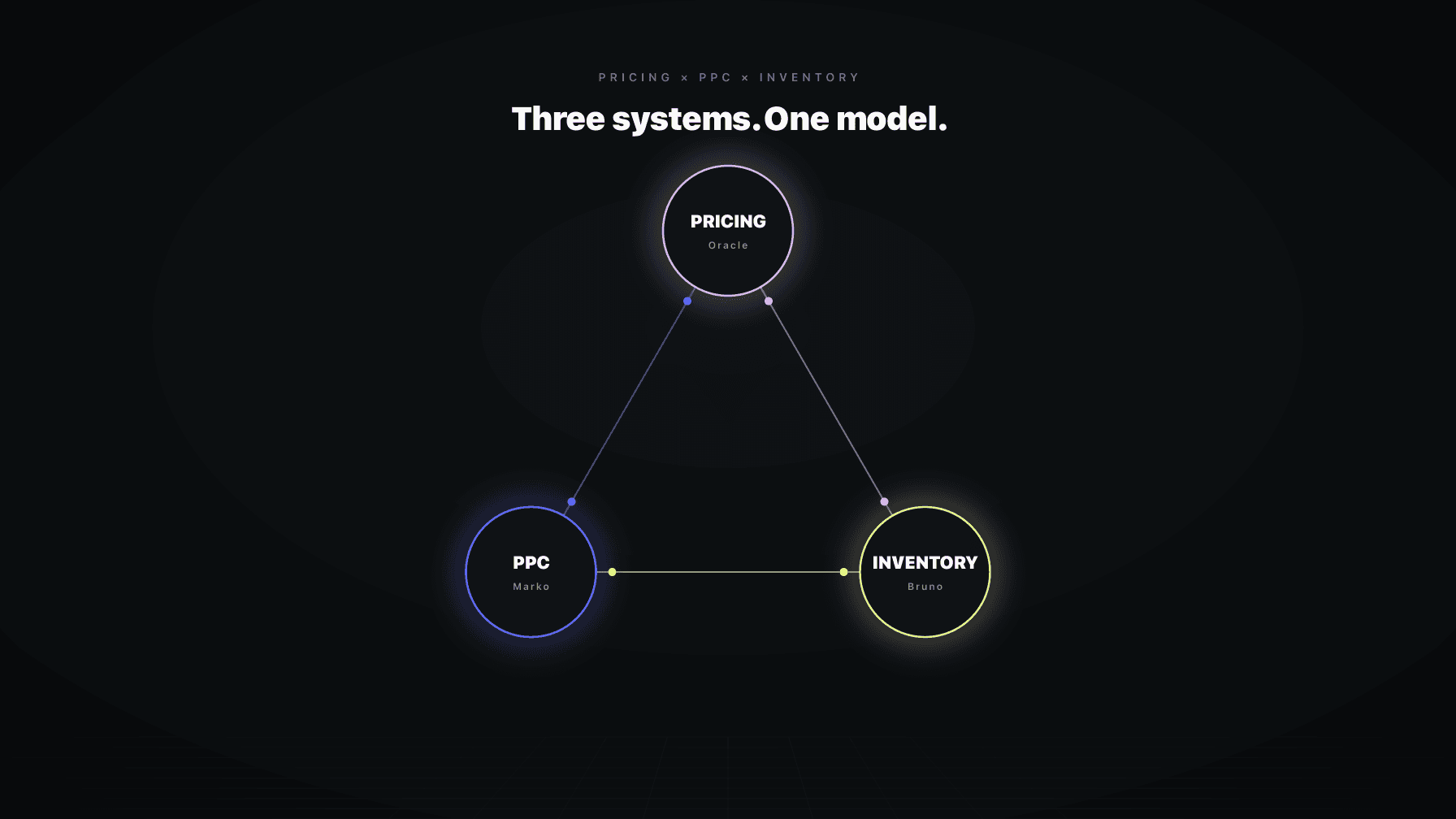
That’s why pricing and ads should be treated as one system.

Profasee’s positioning is explicitly built around this interlock—analyzing price sensitivity alongside ad performance so recommendations account for both profitability and marketing efficiency, instead of optimizing each lever in isolation.
How Profasee Helps With Amazon Pricing

If you’re managing more than a handful of ASINs, manual pricing becomes inconsistent and slow. Profasee is designed to make pricing systematic by:

  • Predicting and deploying optimal prices automatically based on large-scale data signals (rather than static rules).
  • Optimizing to your KPI goal (e.g., profit, sell-through, revenue) and updating prices continuously within a strategy you define.
  • Ingesting real-time market inputs like competitor pricing and consumer behavior (and integrating with Seller Central), so decisions reflect the current marketplace rather than last week’s snapshot.
  • Connecting pricing and ads performance—so price recommendations don’t ignore what’s happening in the auction, and ad spend decisions don’t ignore how price impacts conversion.

The practical outcome: instead of guessing whether you can raise price without hurting rank (or discounting unnecessarily), you’re running a controlled system that aims for the best tradeoff between conversion, velocity, and margin—at scale.

Guardrails and Operational Risk

Dynamic pricing isn’t “hands off.” It’s hands-on strategy, hands-off execution.

Strong guardrails include:

  • Minimum margin thresholds per ASIN
  • Caps on change frequency and magnitude
  • “No-change windows” during listing edits (images/title/A+ updates)
  • Inventory-aware rules (don’t discount into stockouts)
  • Alerts for unusual competitor swings or conversion drops

Frequently Asked Questions

What is data-driven pricing on Amazon?

A system where prices are set and updated based on measurable signals—conversion, competition, inventory, and margin—rather than intuition.

How often should I change prices?

As often as the market requires, but not more than your guardrails allow. The goal is responsiveness without chaos.

Should I lower price to improve ad performance?

Sometimes—but only if incremental contribution margin improves. Better ACOS isn’t a win if it nukes profit per unit.

How does Profasee help specifically?

By automating price optimization based on marketplace signals, predicting optimal prices aligned to your KPI targets, and (critically) incorporating the relationship between price and ad performance so you’re not optimizing each lever in isolation.