
Insights
Blog
Strategies, case studies, and product updates from the Profasee team.
Operator notes by email
Short, opinionated takes on AI agents, Amazon PPC, pricing, and inventory. No fluff. About once a week.
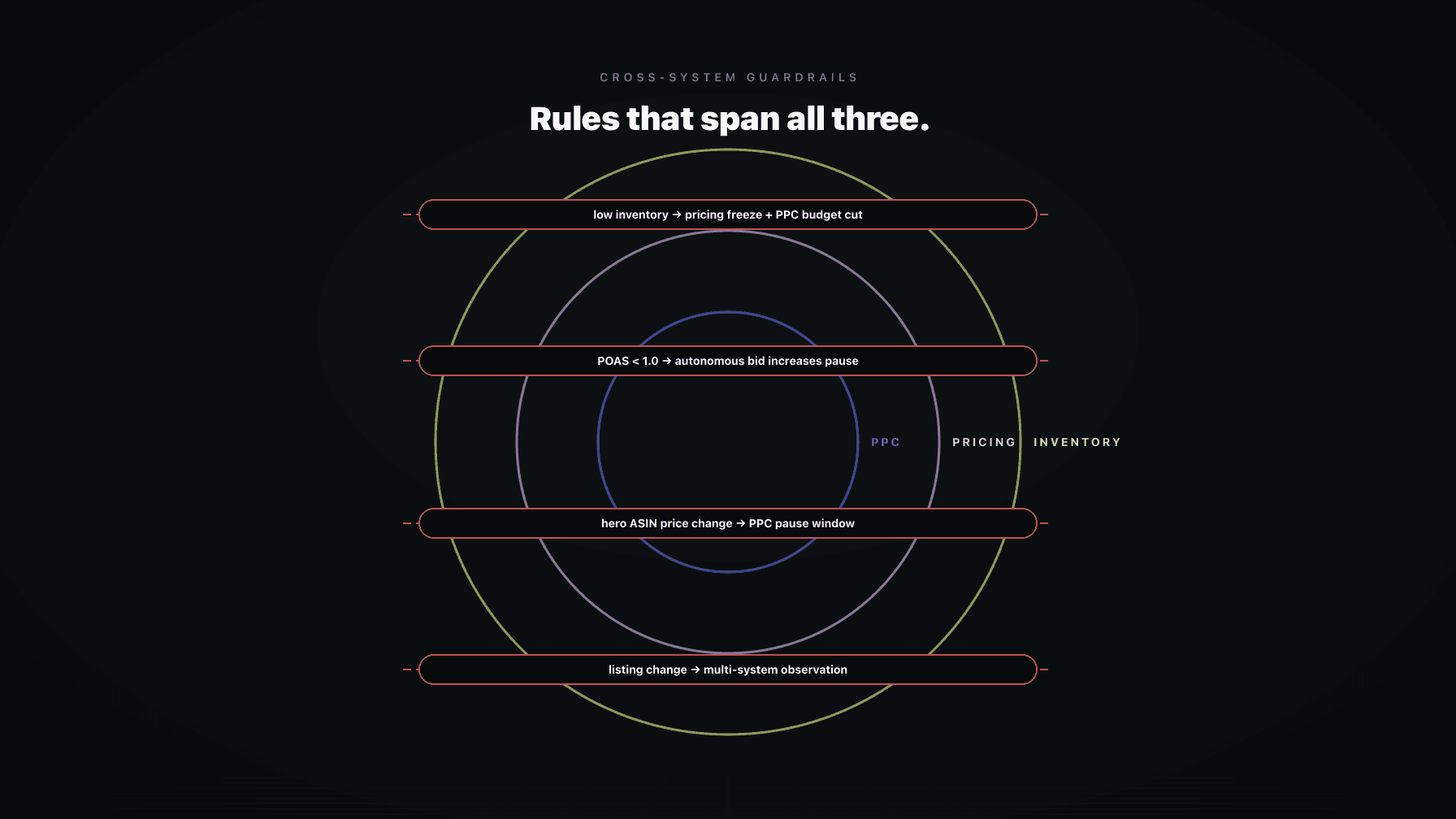
Guardrails Across Pricing, PPC, and Inventory: The Trust Layer for AI on Amazon
Per-tool guardrails are not enough. Here are the cross-system rules that span pricing, PPC, and inventory and let AI agents run autonomously without breaking the business.
 Chad Rubin · May 9, 2026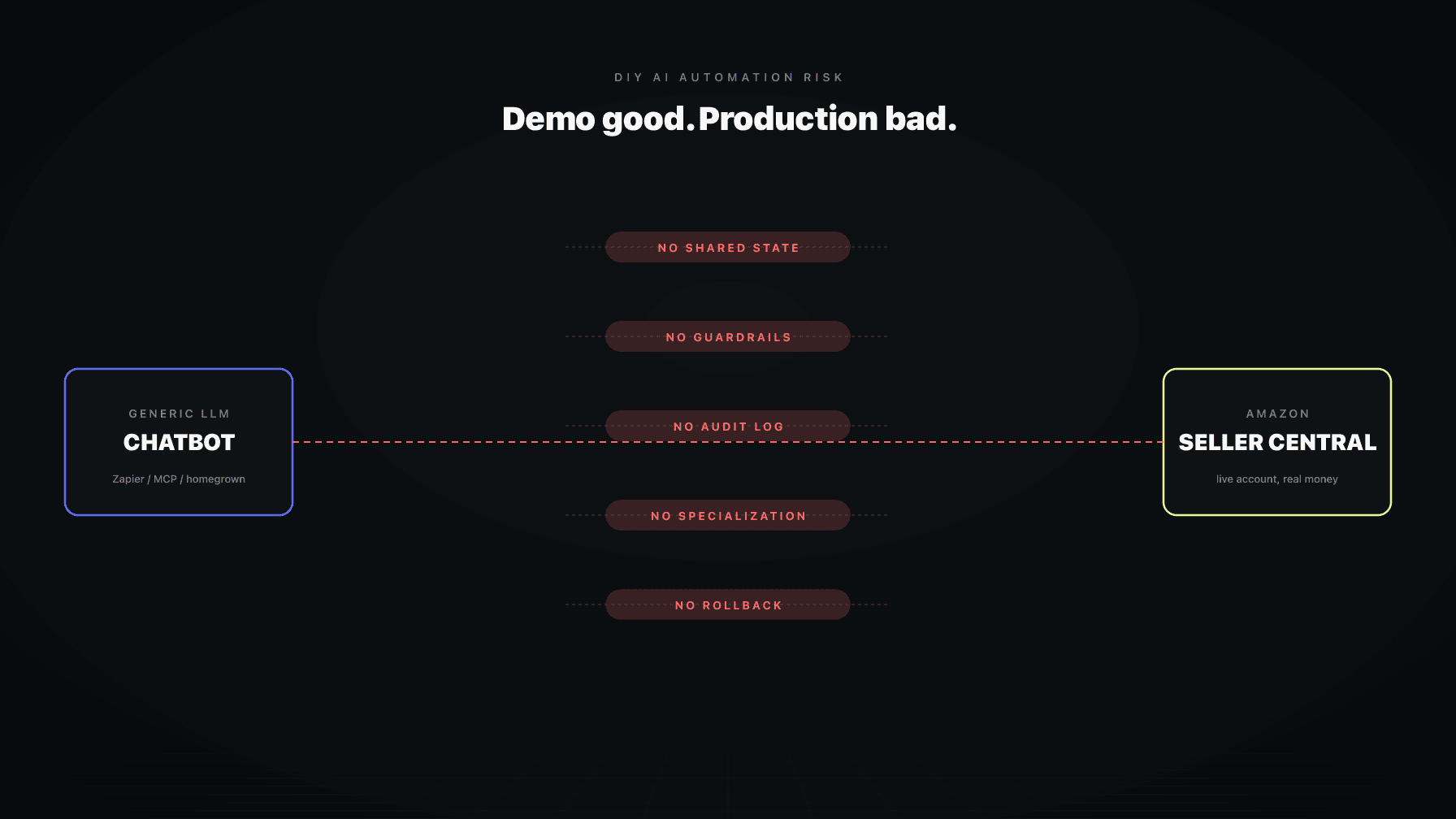
Why DIY AI Automation Is Risky for Amazon Sellers
Connecting GPT or Claude directly to Seller Central is fast and dangerous. Here is the honest risk profile of DIY AI automation and what safe AI looks like.
Chad Rubin · May 9, 2026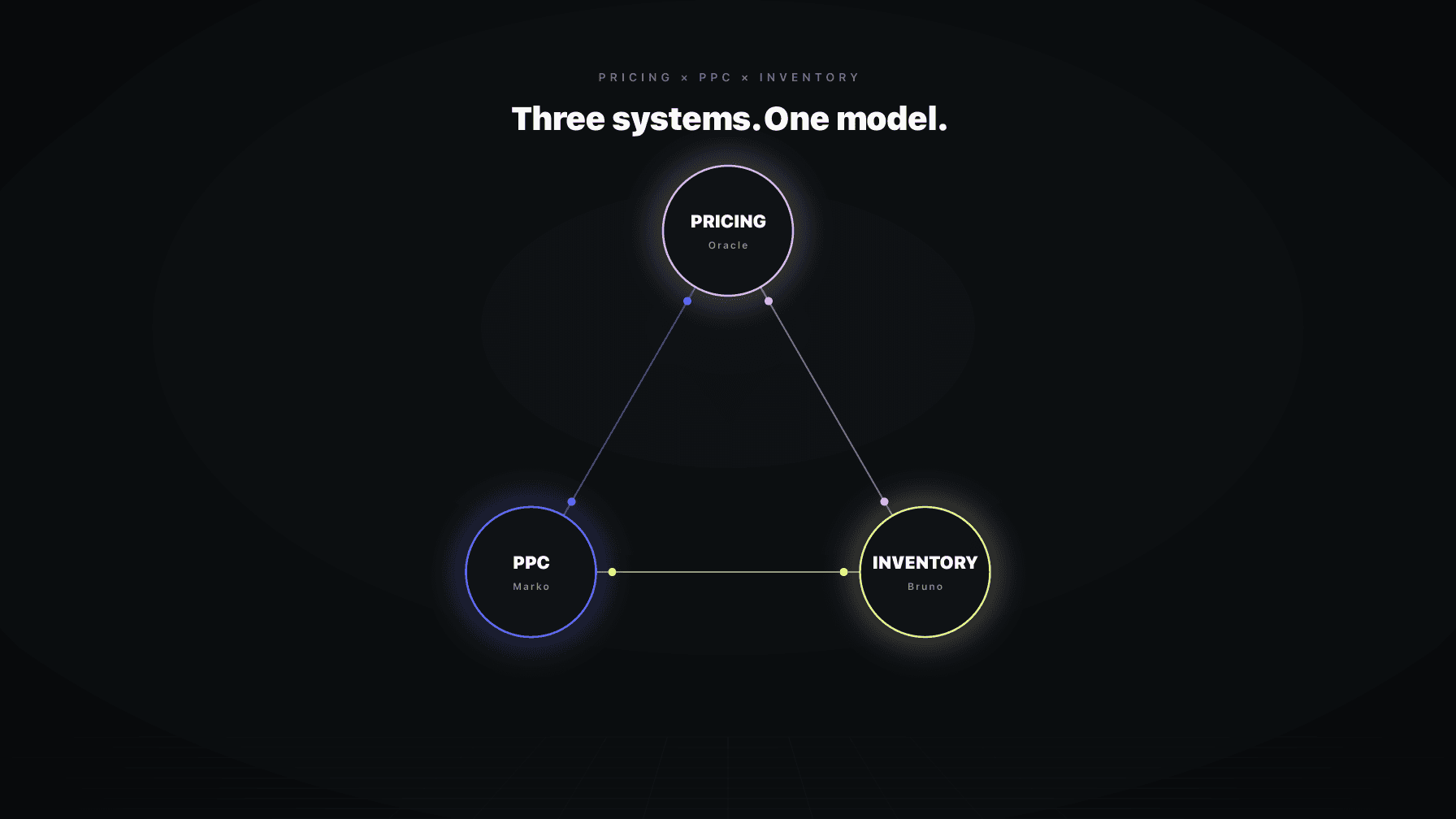
Pricing × PPC × Inventory: The Three-System Coordination Brief
Amazon brands run on three systems that constantly affect each other. Here is the operator brief for keeping pricing, PPC, and inventory in sync.
Chad Rubin · May 8, 2026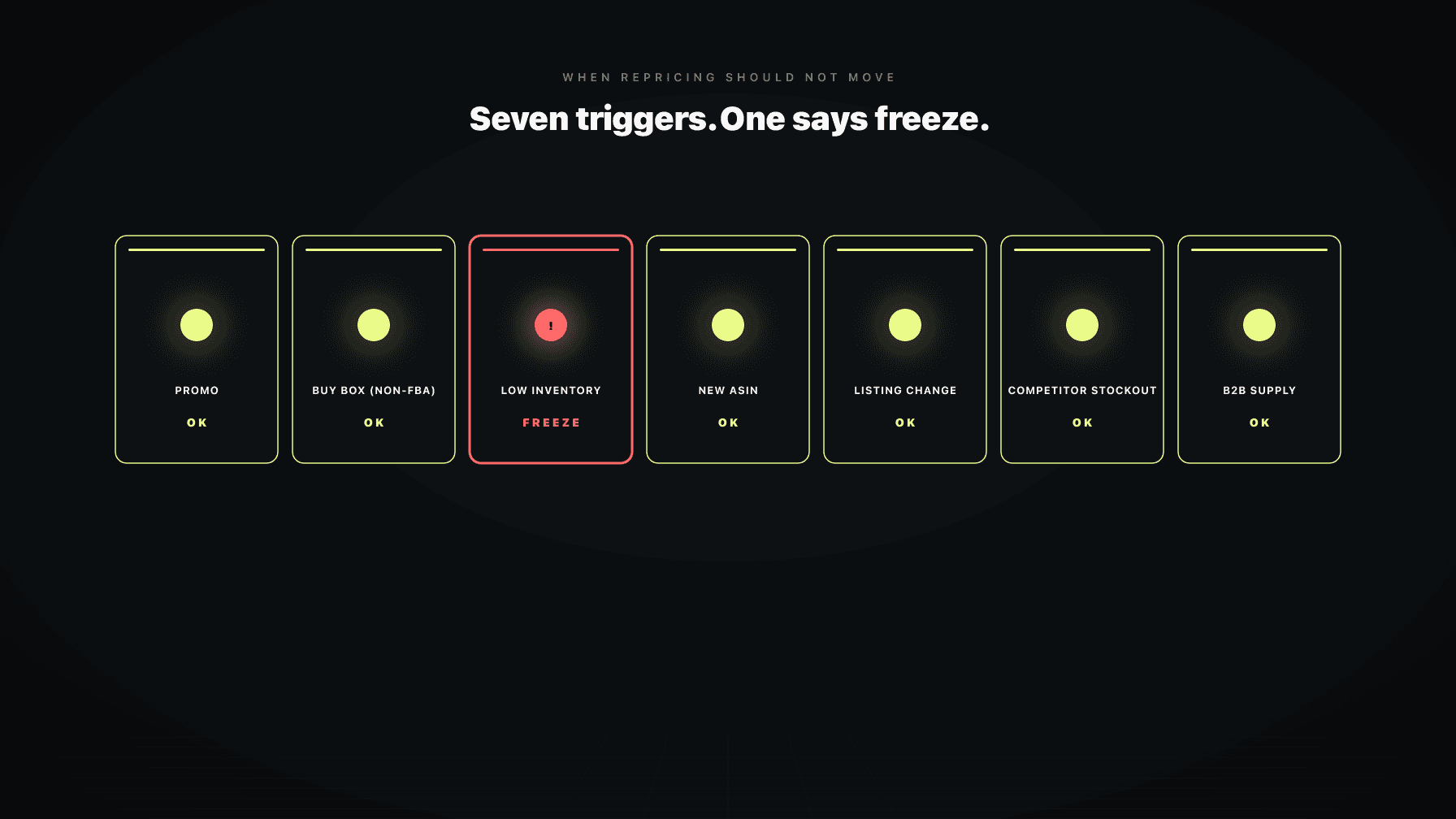
When Repricing Should NOT Move: The Buy Box, Promo, and Inventory Triggers
The most underrated Amazon pricing skill is knowing when to do nothing. Here are the freeze rules, by trigger, that protect margin from over-active repricers.
Chad Rubin · May 6, 2026
The No-Employee Amazon Business: How AI Agents Will Change eCommerce Operations
The no-employee Amazon business is no longer theoretical. Here is what AI agents replace, what humans still own, and what the new org chart looks like.
Chad Rubin · May 4, 2026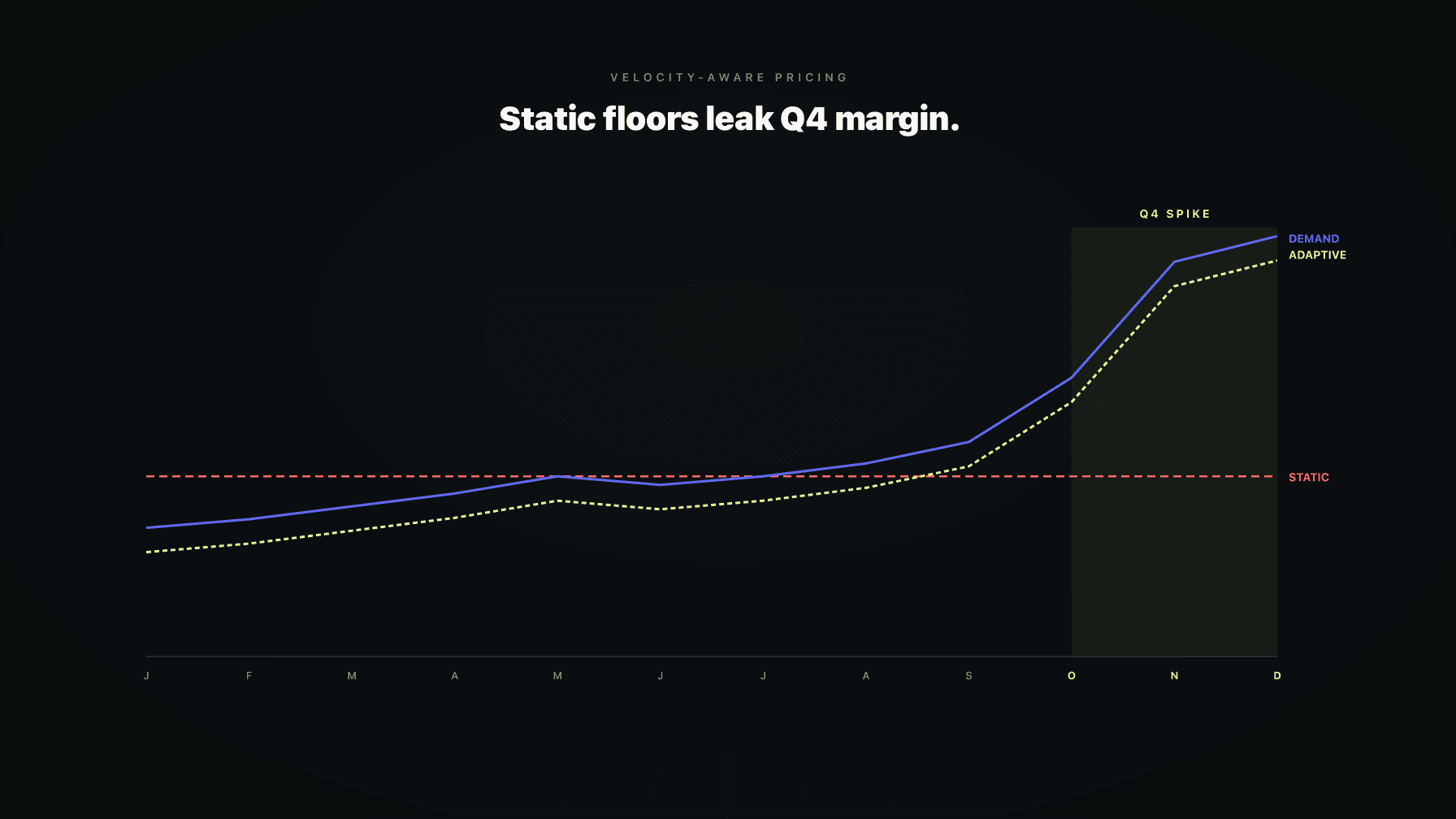
Velocity-Aware Pricing: Why Static Floors Cost You Q4
Static repricing floors and ceilings cost Amazon sellers margin in Q4. Velocity-aware pricing adjusts the band based on demand, inventory, and seasonality.
Chad Rubin · May 4, 2026
Floor and Ceiling Math: How to Set Repricing Boundaries Without Eating Margin
Most Amazon sellers set repricing floor and ceiling wrong. Here is the operator math, with worked examples, that protects margin without crippling the repricer.
Chad Rubin · May 3, 2026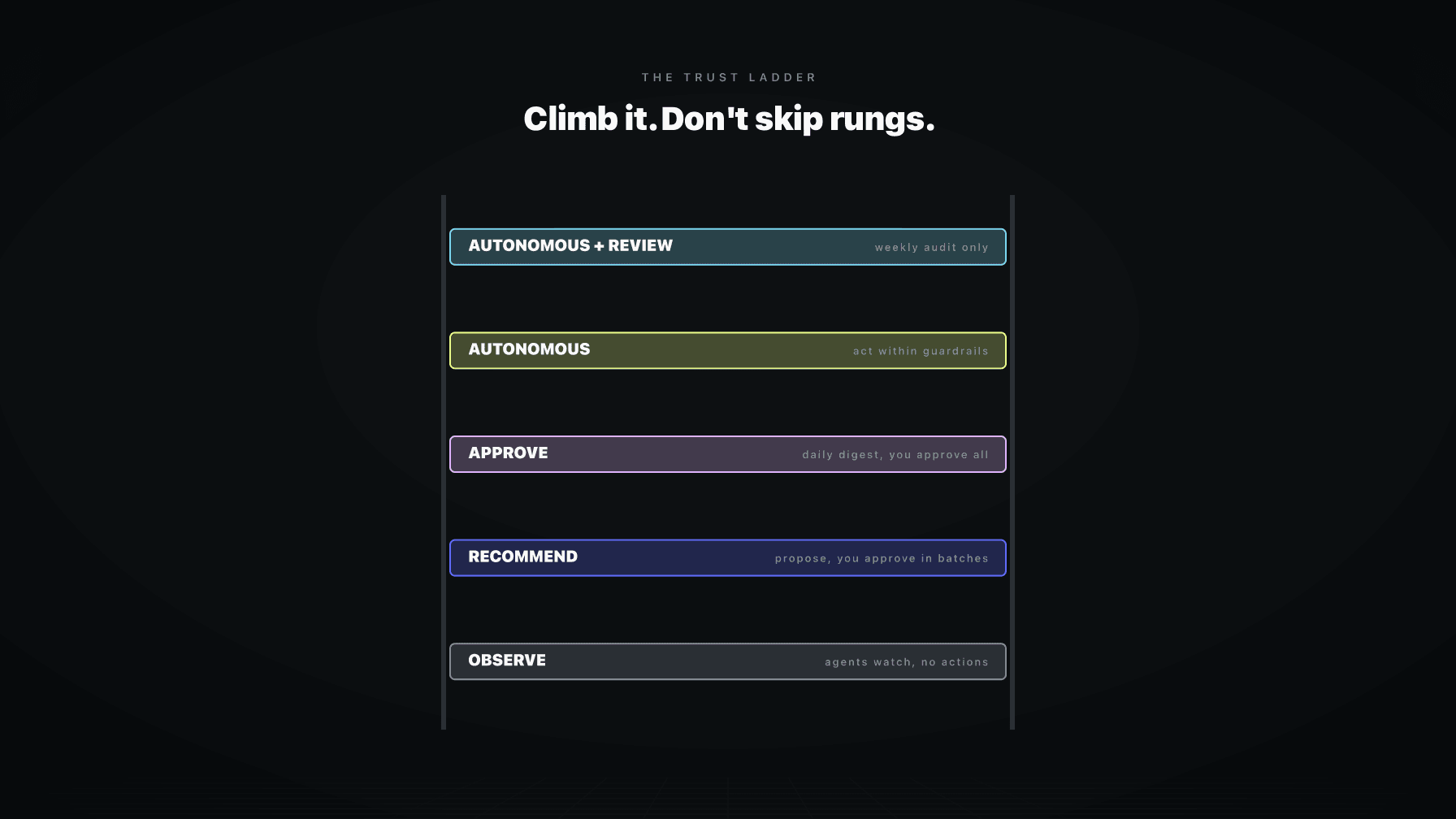
From Ask Me First to Handling It: The Right Way to Adopt AI Agents on Amazon
Most Amazon sellers fail at AI adoption by skipping straight to autonomous mode. Here is the five-stage trust ladder that protects your account.
Chad Rubin · May 2, 2026
Rule-Based vs AI Repricing: Where Each Wins and Where Each Breaks
Rule-based and AI repricing both work, in different conditions. Here is a 2026 operator's breakdown of where each approach wins, breaks, and combines.
Chad Rubin · May 2, 2026