Chad Rubin
June 21, 2026 · 14 min read
Operator notes by email
Short, opinionated takes on AI agents, Amazon PPC, pricing, and inventory. No fluff. About once a week.
The Tightened phase of the Amazon capital cycle is doing what every tightened phase does. It is producing a flood of distressed brands. Founders out of energy. Aggregator portfolios getting unwound at fractions of cost basis. Brands with good unit economics that ran out of inventory financing in the wrong month. Brands that were never good to begin with, dressed up by a broker as a fixer-upper.
I have watched this movie before. I have been on both sides of it. I sold Skubana into a different market, and I have spent the years since talking to operators who bought into the aggregator wave and operators who are buying into the unwind. The pattern repeats.
Here is the truth most buyers will not say out loud. The next 18 months are the best Amazon brand buying window since 2015. They are also the window where most buyers will lose money. Both things are true. Both things are caused by the same thing.
The thing is operational lift.
A distressed Amazon brand is not distressed because the product is bad or the listings are ugly or the ads are wasteful. Those are symptoms. A distressed brand is distressed because nobody is doing the operational work required to keep an Amazon brand healthy. That work is real, it is daily, and it compounds. When you buy a distressed brand, you are not buying revenue. You are buying the right to do that work, with the hope that doing it well produces a margin you can take home.
Most buyers underwrite the price. They do not underwrite the lift. That is why most of them will lose money even at 2x EBITDA. That is also why a small number of operationally capable buyers are going to own categories coming out of this phase.
This post is the framework I use. What to buy. What to avoid. What to fix first. How to think about the lift you are actually signing up for.
Not all distressed brands are distressed for the same reason. The reason matters, because the rescue economics are completely different. Confusing one for another is how you overpay.
There are four sources right now.
1. Aggregator unwinds. The big aggregator story is well covered, including in our piece on why Amazon aggregators failed. What matters for buyers in 2026 is the second-order effect. Restructured aggregators are selling portfolios. Sometimes whole portfolios, sometimes individual brands at the brand level, sometimes piecemeal SKU bundles. The brands inside these portfolios have been managed by people three layers removed from the catalog. Listings have decayed. Brand voice is gone. Ads have been run on autopilot for two years. The product is often still good. The brand around it is hollowed out. Rescue economics here are favorable if you can rebuild the brand layer and you are honest about how long that takes.
From reading to action
If the framework above sounds familiar, your Amazon account is probably carrying the same drag. Apply and we will show what Marko, Oracle, and Bruno would change in your first week.

Ran a 7-figure Amazon brand for a decade. Founded Skubana (acquired). Co-founded Prosper Show. 15+ years on Amazon.
Join the brands that replaced agencies and tools with AI employees.
2. Founder burnout. This is the cleanest source. A founder built a real brand. They ran it well for years. They are out of energy. The operation still works, the team still works, the unit economics still work. They want to sell because they want their life back. These brands are not actually distressed in the operational sense. They are distressed in the founder sense. If you can replace the founder with a real operating system, you can buy these at depressed multiples because the seller's pool of qualified buyers is thin in a tightened market.
3. Capital-stranded brands. Good brand. Real demand. Decent unit economics. Ran out of inventory financing right when they needed to scale into a Q4 or a viral moment. Lost rank because they went out of stock. Cannot get back in stock because the bank line is gone. These are sometimes the best buys in the market because the only thing wrong is a balance sheet. The catch is that rebuilding rank costs money and time, and you have to be willing to spend both before you see a return.
4. Operational debt. The brand is degraded by neglect. Ranking dropped because nobody refreshed the listings. Reviews stalled. Account health is on the edge. The catalog is full of inactive SKUs. Suppression issues nobody fixed. Buy box loss to resellers nobody noticed. The product is fine, the market is fine, but two years of nobody driving the bus shows up as accumulated debt. This is the category most aggregator portfolio brands fall into. Rescue economics depend entirely on whether you can install a real operating system fast.
Each of these four needs a different diligence checklist and a different fix order. Buying a capital-stranded brand and treating it like an operational-debt brand means you will overspend on ops work that was not the problem. Buying an operational-debt brand and treating it like a capital-stranded brand means you will inject inventory dollars into a catalog that is structurally broken.
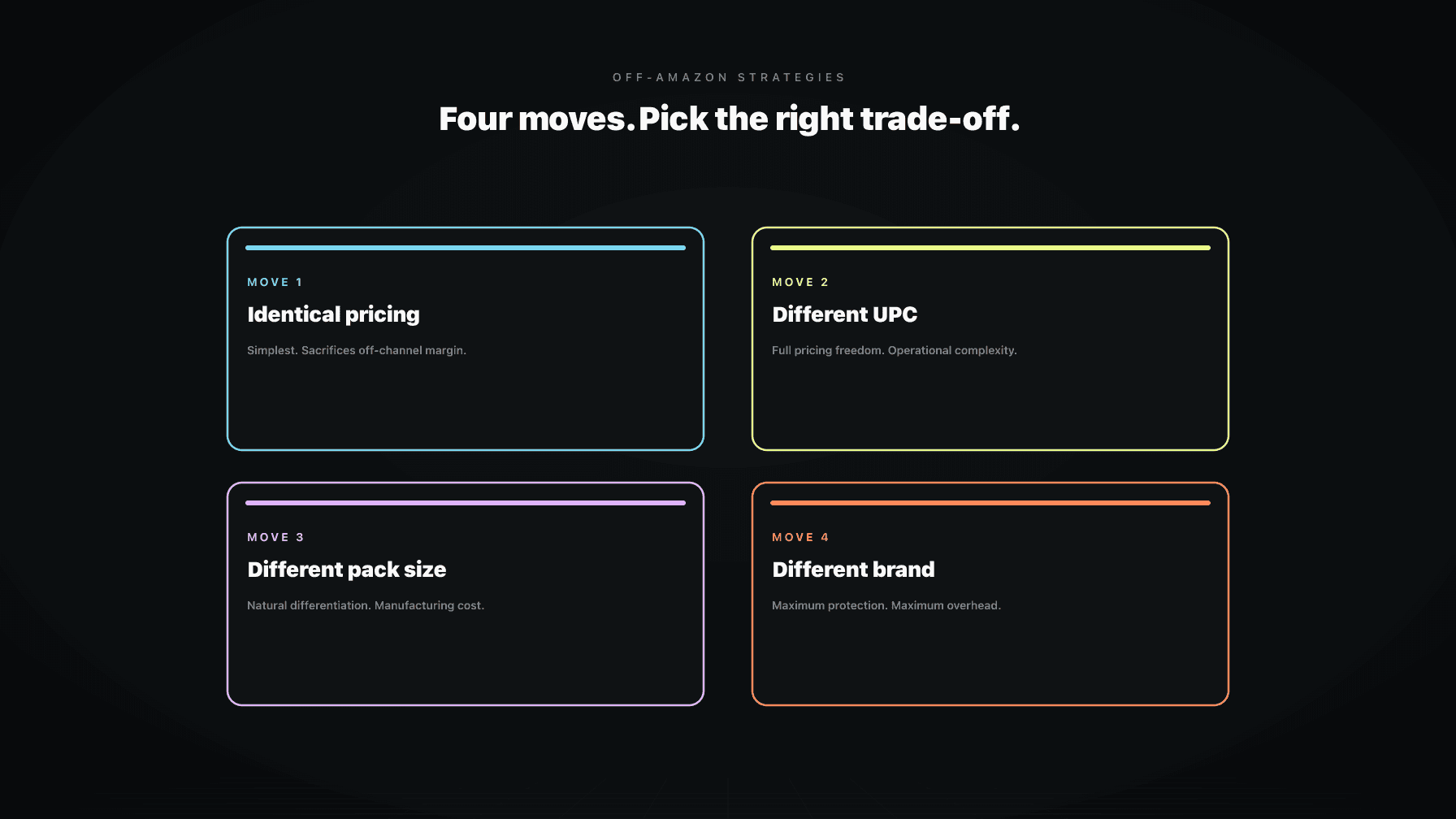
After looking at dozens of these deals, the pattern of brands actually worth buying is narrow. It is narrower than brokers want you to believe.
Clean Brand Registry. Non-negotiable. If Brand Registry is in dispute, contested, shared with a former co-founder, or stuck in some Amazon escalation queue, walk. The cost of resolving Brand Registry can eat the entire deal. I have seen $400k acquisitions die over a $40k Brand Registry mess.
Tight unit economics with operational neglect on top. This is the sweet spot. Strip out the neglect, and the unit economics underneath are real. Margin per unit at the product level supports a healthy P&L if the operational work gets done. Most distressed brands worth buying look like this once you do the work in our Amazon unit economics guide. Neglect is fixable. Bad product economics are not.
Defensible product. The product has a reason to exist. There is at least one feature, formulation, design choice, or sourcing relationship that is not trivially copied by a Chinese seller next week. Defensibility does not have to be a moat. It has to be enough friction that you can take a year to rebuild without getting clipped.
Decent reviews. Not perfect. Decent. The trailing 90-day review velocity does not have to be high, but the all-time average needs to be above 4.0 and the recent reviews need to not be a horror show of quality complaints. Review quality is one of the few things that takes a year to rebuild and cannot be done with a checkbook.
SKU concentration that is manageable. A brand where the top three ASINs do 70 percent of revenue is fine if those three ASINs are stable and defensible. A brand where the top one ASIN does 90 percent of revenue is a single point of failure. Diligence the concentration before you fall in love with the topline.
Low founder-IP risk. The brand does not require the founder to function. Their face is not on the package. Their voice is not the brand voice. Their relationships are not the supply chain. The team can run without them. If the founder is the brand, you are not buying a brand. You are buying a placeholder.
When you find a brand that hits all six, you are in the zone where the price you pay matters less than the lift you sign up for. That is where operational capability becomes the entire game. We dig deeper into what that price should look like in our Amazon brand valuation framework.
The traps look cheap. That is what makes them traps.
Brands with concentrated revenue on one declining ASIN. If 80 percent of revenue is one ASIN and the trailing six-month trend on that ASIN is down, you are buying a chart that points at zero. The seller will tell you the decline is temporary, the category is rotating, the new variation will fix it. Maybe. Maybe not. The risk is asymmetric and the only person it is asymmetric in favor of is the seller.
Brands with margin issues structural to the product. CRaP-zone products. Heavy, low-velocity, low-AOV items where Amazon's fees eat the margin and there is no path to a price increase because the category caps out. These brands will hit a contribution margin ceiling no operational fix can break through. The product is the problem. Walk.
Brands with account health risk. Open IP complaints. Active suspension warnings. A history of safety claims. Restricted product listings. Anything in the Account Health Rating dashboard that flickers yellow or red. Amazon does not care that you just bought the account. Inherited suspension risk is buyer risk from day one.
Brands with Brand Registry disputes. I said it in the buy section and I will say it again. If the registry is contested, walk. I do not care how cheap the brand is. The cost of fixing it will exceed the savings.
Brands where the founder IS the brand. Face on the package. Voice on the YouTube channel. Personal email in customer service. Personal sourcing relationships nobody else has access to. These are creator businesses dressed up as brand businesses. Buy them if you want to inherit a creator job. Avoid them if you want to inherit a brand.
Brands in dying categories. Some categories are structurally shrinking. The buyer pool is aging out, the use case is being eaten by a substitute, or the category has been commoditized into a race to zero. Diligence the category before the brand. A 4-star brand in a dying category is still in a dying category.
Brands with operational dependencies that are not transferable. The seller's PPC agency knows the account inside out and the seller refuses to introduce you. The catalog is held together by one VA in the Philippines who works for the seller's other business and is not coming with the deal. The supplier relationship is personal. Transferability is a diligence line item, not an assumption.
The common thread in the avoid list is that none of these get fixed by the operating system. They are structural. No operational lift, however well executed, fixes a CRaP-zone product or a dying category.
Most buyers run diligence wrong. They spend three weeks on the legal package and three days on the operational reality. Flip that. Here is the 30-day diligence sprint I would run on any distressed brand worth a real look.
Days 1-5: Unit economics by ASIN. Pull a contribution margin sheet per ASIN for the trailing 12 months. Real one. With actual FBA fees, actual returns, actual reimbursements, actual storage. Run the Amazon unit economics framework on every SKU that does more than 2 percent of revenue. You are looking for three things. Which ASINs make money. Which ASINs lose money. Whether the topline number the seller is showing you survives an honest fee model.
Days 6-8: SKU concentration analysis. Revenue by ASIN. Contribution margin by ASIN. Cross-reference. Sometimes the top revenue ASIN is the lowest margin ASIN and the brand is being held up by a smaller SKU with healthier economics. Sometimes the top revenue ASIN is also the only profitable ASIN and everything else is dragging. The shape of the concentration tells you the rescue plan.
Days 9-11: Account Health Rating snapshot. Pull the dashboard. Look at every metric. Look at the trailing 12-month complaint history. Look at every open ticket with Seller Support. Look for hidden suspensions on individual ASINs. Look for IP infringement notices that were resolved but might recur.
Days 12-13: Brand Registry status. Confirm the brand is registered, the registration is clean, and there are no disputes. Confirm trademark status in every region the brand sells in. Confirm the Brand Registry email and admin access transfer cleanly. Get this in writing before you do anything else.
Days 14-17: Inventory position and aging. Real on-hand units. Real inbound shipments. Real aged inventory the seller forgot about. Real long-term storage exposure. Map the inventory to the demand model. Find out how many weeks of cover you are inheriting and whether any of it is dead.
Days 18-20: Review velocity and trend. Trailing 90-day review velocity per ASIN. Trailing 12-month star average trend. Recent 1-star and 2-star content. Patterns in complaints. A declining review trend on a top ASIN is a leading indicator the seller is hoping you do not notice.
Days 21-23: Listing quality scores. Run a catalog audit. Look for suppressed listings, missing A+ content, broken variation themes, outdated images, parent-child structure issues. This is also where you find the easy wins.
Days 24-26: Supplier relationships. Who are the suppliers, what are the terms, what is the lead time, what is the MOQ, who has the relationship, and is it transferable. Get on a call with the top supplier before close. Suppliers will tell you things the seller will not.
Days 27-30: Operational dependencies. Which tools. Which agencies. Which VAs. Which freelancers. Which automations. Which spreadsheets. Which manual processes. This is where you build the operational lift number. Most of this work is going to be replaced by an AI operating system, but you cannot replace what you have not first inventoried.
By day 30, you should know the price you are willing to pay, the lift you are willing to underwrite, and the order you are going to do it in.
Order matters. Doing the right work in the wrong order is how you spend six months and end up worse than where you started. The fix order I use is this.
1. Stop the bleeding. Cut spend that does not produce profit. Pause ads on stockout-risk ASINs. Kill subscription tools you do not need. Pause any program that loses money on every transaction. This is week one. The goal is to stabilize cash, not to grow.
2. Account health protection. Anything threatening suspension. Open complaints, IP issues, safety claims, restricted listings. The Account Health Rating dashboard is the daily checklist. Suspension risk eats everything else, so it goes second.
3. Unit economics rebuild. Set price floors. Audit COGS. Renegotiate FBA fee classifications where misclassified. Recover reimbursements. Cut SKUs that lose money structurally. This is where the brand becomes a brand that can fund its own growth instead of a brand that subsidizes its own decline.
4. AI operating system installation. This is where most buyers go too slow. Replace the disconnected tools with a coordinated set of agents. PPC, demand forecasting, catalog management, account health monitoring, supplier communication, customer service triage. Our piece on Amazon operations mission control covers what the layer looks like. Doing this in month two or three, not month nine, is what separates the operators who turn these brands around from the ones who burn out trying to do it with VAs and spreadsheets.
5. Listing and review quality. Catalog auditor work. Rewrite copy, refresh images, fix A+ content, fix variation structure, request reviews in the right cadence, respond to negative reviews. This is steady, daily work that compounds over six months.
6. Growth. Only after the above. New SKUs, new categories, new marketplaces, paid expansion. Growth before the foundation is rebuilt is how distressed brands stay distressed.
If you do this in order, six months in you have a brand that is stable, profitable, and ready to scale. If you skip the order, six months in you have a brand that looks the same but with a different name on the seller account.
This is the part most buyers miss, and the part that determines whether you make money or not.
Buying a distressed Amazon brand at 2x EBITDA means nothing if the operational lift required to maintain that EBITDA costs 30 percent of revenue. You did not buy a 2x EBITDA brand. You bought a brand whose true cost structure includes the work that was not being done when the seller showed you the P&L.
The operational lift number has a few components. Daily ops labor, whether that is a team or a set of agents. Catalog work, ongoing not one-time. PPC management, real management not autopilot. Account health monitoring, every single day. Inventory planning, supplier management, returns processing, review response, customer service triage. Add it up. Honestly.
For most distressed brands, the lift required to maintain the EBITDA the seller is showing is significantly more expensive than the lift the seller was actually performing. That is why the brand is distressed. The seller stopped paying for the lift, took the margin to the bottom line, and called it EBITDA. You are inheriting the bill.
The buyers who get this right are the ones who can deliver that lift at a lower cost than the previous owner. That is not done by hiring more VAs. It is done by replacing the disconnected operational layer with an AI operating system that runs the brand the way a real operator would, every day, without burning out. The economics work because the lift is cheaper per dollar of GMV. The brand stabilizes because the work actually gets done. The category gets owned because most of your competitors are still doing it with spreadsheets and prayer.
The next 18 months will produce a lot of distressed buyers and a small number of operationally capable buyers. The capable ones will own categories on the other side of this. If you are thinking about being one of them, this is the framework. Underwrite the lift, not the price. Buy the brands that fit the buy list. Walk on everything in the avoid list. Run the 30-day sprint. Fix in order.
If that is the kind of operation you are building, come talk to us.
The supply is everywhere right now. Brokers have inventory they cannot move. Aggregators are quietly shopping portfolio brands. Founders are listing in Amazon seller communities and on the smaller marketplaces. The best deals are off-market, sourced through operator networks and through direct outreach to founders showing signs of burnout. Brokered deals are competitive but the diligence package is at least structured. Off-market deals are cheaper but require you to build the diligence yourself.
Depends on the source of distress. Aggregator unwinds are trading at meaningful discounts to original cost basis. Founder burnout deals are clearing at 2 to 3x SDE in the current market for clean brands. Capital-stranded brands trade at whatever covers the seller's debt plus a small premium. Operational debt brands trade at 1 to 2x SDE because the buyer is taking on real risk. None of these numbers matter if the operational lift you are underwriting is wrong. Run our valuation framework before you anchor on a multiple.
Unit economics by ASIN. Everything else flows from there. If you do not know which ASINs make money and which lose money, you cannot price the brand, plan the turnaround, or underwrite the lift. After unit economics, account health and Brand Registry are the two zero-tolerance items. After that, SKU concentration and supplier transferability.
Six months to stabilize. Twelve months to grow. Eighteen months to know whether the brand is back. Buyers who promise themselves a 90-day turnaround are usually the buyers who quit at month four.
Yes, and the operational leverage is real. The fixed cost of running a brand goes down per dollar of revenue when you add a second brand to the same operating system. This is exactly why operationally capable buyers will compound during this phase. They are not buying revenue, they are buying capacity utilization on infrastructure they already pay for.
Underwriting the price instead of the lift. They run a financial model, get comfortable with the multiple, and assume the brand will continue to produce what the seller's P&L says it produces. The seller's P&L reflects the work the seller stopped doing. The brand will not produce that EBITDA unless the new owner does the work. Most first-time buyers do not have the operational capacity to do the work, and they do not have the systems to do it cheaply, so the EBITDA evaporates within a year. We wrote about the steward-of-capital frame for buyers thinking about this seriously.
Yes, if you are operationally capable. No, if you are not. The Tightened phase of the capital cycle is the best buying window since 2015 for operators who can do the work and the worst window in a decade for buyers who cannot. The price does not separate the two. The lift does.